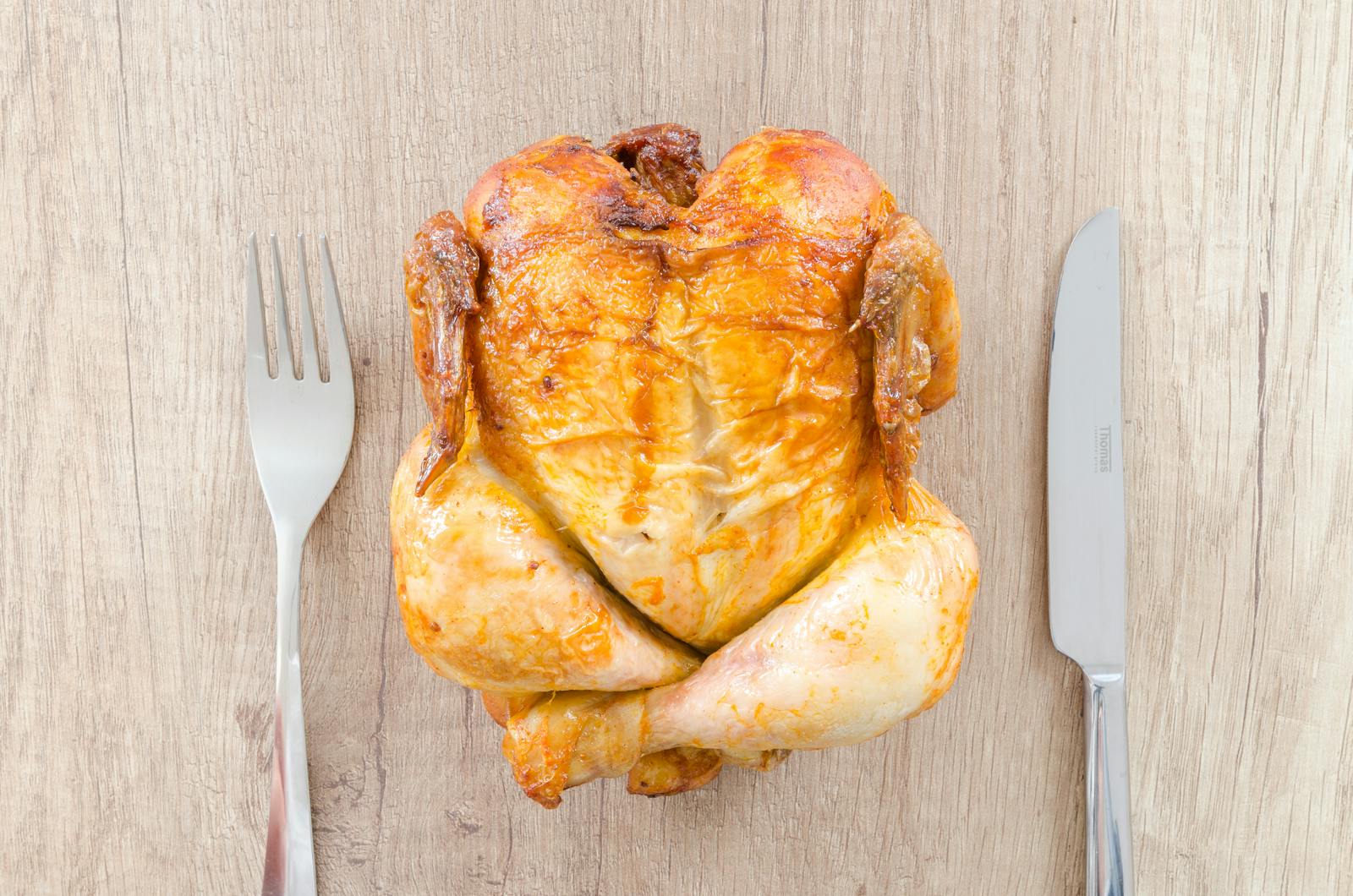
Key takeaways
Frozen chicken leg quarters from Brazil are the world's most-traded poultry cut, exported under HS code 0207.14 in 15 kg IQF master cartons. Standard weight bands are 180–220 g, 220–260 g and 260 g+. MOQ is one 40-foot high-cube reefer (≈27 tonnes). Indicative FOB Santos pricing in 2026 sits between USD 1,050–1,450 per tonne. Halal certification is available from CDIAL, FAMBRAS and other GCC-recognised bodies, and every export plant operates under Brazil's SIF inspection system.
Frozen chicken leg quarters are Brazil's most-shipped poultry cut, moving in container loads to Mexico, Iraq, the United Arab Emirates, Saudi Arabia, South Africa, Cuba, China and across West Africa. For wholesalers, distributors and foodservice importers, the leg quarter, drumstick attached to thigh, bone-in and skin-on, delivers the best protein-cost ratio in the entire poultry catalogue. This 2026 wholesale guide explains what to specify, what to pay, how the shipment moves, and which Brazilian standards make the cut bankable for global B2B buyers.
Why Brazil leads global leg-quarter supply
Brazil exported a record 5.32 million tonnes of chicken meat in 2025, more than one-third of the world's poultry trade, according to ABPA (Brazilian Association of Animal Protein). Leg quarters and other dark-meat cuts account for the largest single share of that volume because the Brazilian domestic market prefers breast meat, leaving legs available for export at competitive prices. Vertical integration, feed mills, hatcheries, grow-out farms, slaughter plants and reefer logistics under one company, keeps cost-per-kilo lower than any other major exporter. The country's grain belt produces corn and soybean meal at scale, compounding the cost advantage every cycle.
Product specification buyers actually order
A standard frozen chicken leg quarter from Brazil is the unsevered drumstick-and-thigh cut, bone-in, skin-on, with the back portion removed (back-off) or partly attached (back-on), depending on destination preference. Buyers specify three things: weight band, packaging and certification status. Typical weight bands are 180–220 g (light, popular in Mexico and Cuba), 220–260 g (the workhorse spec for the GCC and Africa) and 260 g and above (premium foodservice). Bulk export cartons are 15 kg net, master-packed in printed corrugated boxes with food-grade polybag liners. IQF (individually quick frozen) is the default; block-frozen is available on request for industrial processors. Halal-certified product carries on-pack certification marks and per-shipment halal certificates from CDIAL, FAMBRAS or another GCC Accreditation Center–recognised body.
Top destination markets and what each prefers
Brazilian leg quarters land in more than 150 countries, but a handful of markets dominate volume. Each one has its own preferred weight, port and paperwork.
Mexico
Mexico is the single largest importer of Brazilian leg quarters, taking the light 180–220 g spec for both retail and quick-service foodservice. Most shipments move CIF Veracruz or Altamira. Spanish-language labelling and SENASICA-compliant sanitary documentation are mandatory at clearance.
Iraq, Saudi Arabia and the United Arab Emirates
Gulf and Iraqi buyers pull the 220–260 g spec, fully halal-certified, often in printed retail-ready 15 kg cartons. Common discharge ports are Umm Qasr (Iraq), Jeddah and Dammam (Saudi Arabia) and Jebel Ali (UAE). Most GCC importers require SFDA registration of the exporting plant and per-shipment halal certificates issued by a GAC-accredited body.
South Africa and West Africa
South Africa, Angola, Ghana and the Democratic Republic of Congo absorb large volumes of mixed leg-quarter loads. Discharge typically at Durban, Luanda, Tema and Pointe-Noire. Buyers value mid-weight bands at sharp CIF prices and accept generic-branded master cartons.
China and Cuba
China imports significant volumes of dark-meat cuts under official plant-approval lists; only SIF plants approved by the General Administration of Customs of China (GACC) may ship. Cuba is a stable buyer of light leg quarters under government tenders, typically discharging at Mariel and Havana.
Pricing, MOQ, Incoterms and container math
Brazilian leg quarters move under HS code 0207.14. The standard sales unit is one 40-foot high-cube reefer container, loading roughly 26.5 to 27 metric tonnes net of product. Minimum order quantity is one container. FOB Santos, Paranaguá and Itajaí are the most common Incoterms 2020 quotations; CIF and CFR are widely available for buyers who prefer ocean freight bundled into the offer. Indicative FOB pricing in 2026 has ranged between USD 1,050 and USD 1,450 per tonne depending on weight band, halal status and contract size, request a live quote for current prices, since the market moves weekly on feed cost, FX and avian-influenza headlines.
Compliance and certification
Every export-approved Brazilian plant operates under the Serviço de Inspeção Federal (SIF). The SIF number is printed on every carton and on the sanitary certificate that accompanies each shipment. Halal certification is issued by Islamic centres recognised by the GCC Accreditation Center, JAKIM (Malaysia) or BPJPH (Indonesia). Country-specific approvals, SFDA for Saudi Arabia, GACC for China, FSSAI for India, must be verified plant-by-plant before contracting. A reputable exporter shares plant codes and current approval status before issuing a proforma invoice.
Cold-chain and shipping windows
Reefer containers are pre-cooled to –20°C, loaded under SIF supervision in under 90 minutes and sealed before quay-side handover. Continuous data loggers record temperature every 15 minutes throughout the voyage. Typical transit times from Santos are 18–24 days to Veracruz, 22–28 days to Jebel Ali, 25–32 days to Durban, 30–38 days to Shanghai and 28–35 days to Havana. Buyers should always demand temperature logs on arrival before bonded release; a flat –18°C trace is the proof that shelf life, up to 24 months from production, is intact.
Frequently asked questions
- What is the difference between a chicken leg and a leg quarter?
- A chicken leg is the drumstick alone. A leg quarter is the drumstick and thigh together, unsevered, bone-in and skin-on. The quarter is the higher-yield, lower-cost cut and is what most international wholesale buyers actually order.
- What is the HS code for frozen chicken leg quarters?
- Frozen cuts and edible offal of fowls of the species Gallus domesticus are classified under HS code 0207.14. Most destinations break this further into a national subheading for leg quarters specifically.
- What is the minimum order quantity from Brazil?
- One 40-foot high-cube reefer container, loading approximately 27 metric tonnes net. Lower volumes are possible by consolidation, but rarely make commercial sense once freight is added.
- Is Brazilian chicken halal-certified?
- Yes, when ordered as halal. Brazil has dedicated halal slaughter lines with on-site Islamic supervision and is the world's largest exporter of halal poultry. Each shipment includes an original halal certificate from a GCC-recognised certifier.
- How long can frozen chicken leg quarters be stored?
- At a continuous –18°C, shelf life is 18 to 24 months from the production date printed on the carton, provided the cold chain has not been broken in transit or at the destination warehouse.
- What payment terms are standard?
- Sight letter of credit through a top-tier bank is the standard. CAD (cash against documents) and partial advance with the balance against shipping documents are used for repeat buyers. Open account is reserved for long-standing relationships.
- Who are the largest importers of Brazilian frozen chicken leg quarters?
- Mexico, Saudi Arabia, the United Arab Emirates, Iraq, China, South Africa, Angola, Ghana and Cuba are the largest destinations. Mexico takes the light 180–220 g spec; the GCC and Iraq pull the halal-certified 220–260 g workhorse; African and Cuban buyers absorb mixed weight loads.
- How much does a 40-foot reefer container of Brazilian chicken leg quarters cost in 2026?
- Indicative FOB Santos pricing in 2026 has ranged between USD 1,050 and USD 1,450 per metric tonne depending on weight band, halal status and contract size. A standard 40-foot high-cube reefer loads roughly 27 metric tonnes net, so a full container is approximately USD 28,000 to USD 39,000 FOB before ocean freight and destination charges.
- Are Brazilian chicken leg quarters approved for export to China?
- Yes, but only from SIF plants that appear on the General Administration of Customs of China (GACC) approval list. Plant approval status is updated regularly, buyers should always verify their supplier's SIF plant code against the current GACC list before contracting.
Frozen Chicken from Brazil
Brazilian frozen chicken for wholesale buyers, with specifications confirmed per order.
Explore frozen chickenReferences & further reading
Explore our export catalogue
Brazil Prime Foods Export coordinates frozen-meat sourcing and export for wholesale buyers in eligible markets. Confirm the supplying plant and documentation for your order.
Request support
Ask our export team about pricing, specifications, documentation or shipping for your order.
Request a QuoteContact us
Direct line to our trade desk in Brazil, calls, WhatsApp and email.
Contact our team