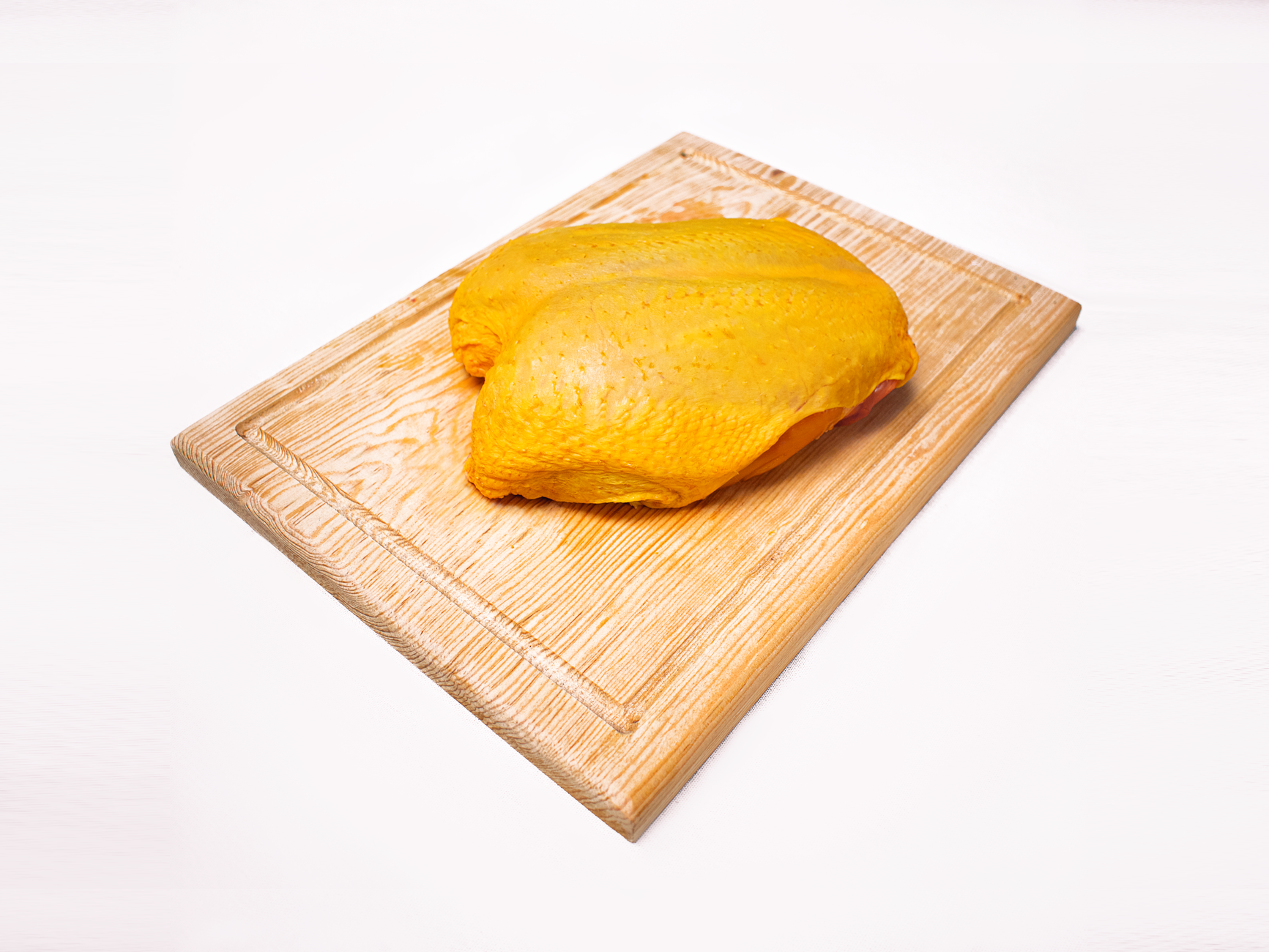
Brazil is the world's largest exporter of chicken meat, shipping to more than 150 countries across every continent. For importers, distributors, supermarkets and foodservice buyers, that scale translates into three commercial advantages: competitive pricing, dependable volume, and a depth of product range few origins can match. But “buying Brazilian chicken” is not a single decision, it is a series of them, each affecting your cost, compliance and customer satisfaction. This guide walks through every one, so your next order arrives on specification, on time, and fully compliant for your market.
Why source frozen chicken from Brazil
Brazil's poultry sector pairs large-scale, vertically integrated production with a robust federal sanitary inspection system. According to the Brazilian Animal Protein Association (ABPA), the country exports millions of tonnes of chicken every year. For buyers, the practical advantages come down to four points:
- Price: abundant domestic feed (corn and soy) and efficient processing keep production costs competitive at scale.
- Range: every class and cut, including halal lines, whole birds, and portioned packs for retail, foodservice and further processing.
- Reliability: mature export logistics and high container availability from major ports such as Santos and Paranaguá.
- Compliance: a federal inspection system (SIF) recognised by importing authorities around the world.
For most buyers, the question is not whether Brazil can supply, but how to specify and contract the right product. The rest of this guide covers exactly that.
Product range: grades, classes and cuts
Brazilian exporters offer the full poultry catalogue. Knowing the standard terminology lets you specify precisely and compare quotes fairly.
Whole birds and classes
- Whole birds, calibrated by weight (commonly 800–1,400 g), in Grade A and Grade B quality classes.
- Griller birds (typically 900–1,200 g), tender, popular for retail rotisserie and HORECA.
- Broiler birds (typically 1,200–1,600 g), mature birds for portioning and catering.
Cuts and their typical markets
| Product | Typical use | Common markets |
|---|---|---|
| Leg quarters | Retail & bulk catering | Africa, Middle East |
| Wings (3-joint) | Foodservice, QSR | Asia, Middle East, Europe |
| Breast fillets | Further processing, retail | Europe, Asia |
| Drumsticks / thighs | Retail, foodservice | Global |
| 9-piece griller | Retail value packs | Africa, Middle East |
Match the product to your market: leg quarters and wings dominate many African and Middle Eastern markets; whole griller birds suit retail and HORECA; fillets feed further processing. Browse the live catalogue on the frozen chicken page, or view individual SKUs such as the frozen whole chicken and frozen chicken wings.
IQF vs block-frozen
Two freezing formats serve different needs, and choosing correctly affects both handling and price:
- IQF (Individually Quick Frozen): each piece freezes separately, so buyers can portion without thawing the whole pack, ideal for retail and foodservice that draw down stock gradually.
- Block / interleaved frozen: pieces freeze together in a mass, lower handling cost per kilo, suited to processors and bulk catering that use a full block at once.
If your customers buy in small, frequent quantities, IQF usually pays for itself in reduced waste. If you run a processing line, block freezing is often the more economical format.
Packaging and labelling
Packaging protects the product and carries the information your destination's authorities require. Typical export formats include polybag-lined cartons (commonly 10–15 kg net), bulk cartons, and printed retail packs for private-label programs. When specifying, confirm:
- Net weight per carton and pieces/calibration per pack
- Inner packing (IQF poly, interleaved, or vacuum) and master carton dimensions
- Labelling language and content, many markets require local-language labels with production and expiry dates, net weight, origin and plant number
- Private-label or co-pack options if you sell under your own brand
Flexible and private-label packaging is widely available; agree artwork and label compliance before production to avoid clearance issues at destination.
Certifications that matter
Certification is non-negotiable in poultry trade. Require, at minimum:
- SIF (Serviço de Inspeção Federal): Brazil's Federal Inspection Service under MAPA. A plant's SIF registration is your baseline assurance and the precondition for export.
- HACCP and ISO 22000: food-safety management at every critical control point.
- Halal: issued by certifiers recognised in your destination (e.g. GCC bodies, JAKIM, MUI). Essential for Middle East and many Asian and African markets.
Match certification to the destination: a shipment to the Gulf needs halal certification from a GCC-recognised body and an approved plant, while an EU shipment focuses on the establishment's EU approval status. We explain the federal seal in detail in our guide to SIF certification.
Pricing and Incoterms
Frozen chicken is usually quoted FOB (you arrange ocean freight from the Brazilian port) or CIF (the exporter arranges freight and insurance to your destination port). Prices move with feed costs, the Brazilian real, global demand, and seasonality.
| Term | Who arranges freight | Who insures | Best for |
|---|---|---|---|
| FOB (Port of Santos) | Buyer | Buyer | Buyers with their own freight rates |
| CIF (destination port) | Exporter | Exporter | Buyers wanting a delivered price |
Always request a written quote that states product specification, packing, minimum order quantity (MOQ), Incoterm and price validity. Because frozen poultry usually ships by the full container (FCL), confirm how the carton mix fills a 40' reefer so you can compare landed cost accurately. Start a request on our quote page.
Cold chain and logistics
Frozen chicken must stay at −18 °C from the plant to your destination, without excursion. Reputable exporters pre-cool product to core temperature, load reefer containers under HACCP, set and verify the container set-point, and monitor temperature in transit. Any break in the cold chain risks quality loss and, at strict ports, rejection on inspection. Plan in-country cold storage and last-mile distribution before the container lands.
Documentation checklist
A clean, accurate document set is the single biggest factor in fast customs clearance. For most destinations you will need:
- Commercial invoice and packing list
- Bill of lading
- Certificate of origin
- Sanitary / veterinary health certificate
- Halal certificate (where required)
- Any destination-specific import permit or registration
Requirements vary by country, see our country guides, beginning with importing Brazilian food by country.
Common mistakes to avoid
- Ordering block-frozen when your customers need IQF portioning (or vice-versa).
- Confirming price before confirming plant approval and certificate scope for your market.
- Overlooking destination labelling rules, which can hold a shipment at inspection.
- Not agreeing the reefer set-point and monitoring expectations in writing.
- Treating the first order as a one-off rather than vetting for a long-term supply program.
How to choose a supplier
Reliability separates a good first order from a lasting supply partner. Vet every exporter for:
- SIF-registered, audited plants and transparent certifications
- Consistent specifications, calibration and packing batch to batch
- Documented cold-chain control and temperature monitoring
- Clear, responsive communication and complete documentation
- References from buyers in your region and product category
Learn how we work about Brazil Prime Foods, and see how to choose a reliable Brazilian meat exporter for a deeper due-diligence checklist.
Normalising offers so you compare like with like
Two quotations at the same headline price can differ by double digits in real cost. Before comparing, restate every offer on the same basis: price per kilogram of product excluding ice glaze, delivered to your cold store. That means adjusting for the declared glaze percentage, confirming whether the invoice is on net or gross weight, adding freight and any peak-season or bunker surcharge, insurance, duty, clearance and port charges, reefer plug-in and storage days, inland haulage, and the finance cost of your payment instrument over transit and holding. Ask for both FOB and CIF quotations so freight remains visible and negotiable.
Sequencing your first programme
| Step | Action | Why |
|---|---|---|
| 1 | Confirm establishment listing for your destination | Market access is plant specific, not country wide |
| 2 | Agree specification, glaze and packing in writing | Prevents the most common commercial dispute |
| 3 | Approve label artwork before production | Relabelling at destination is slow and often not allowed |
| 4 | Secure import permit where required | Permits are usually needed before shipment, not after |
| 5 | Contract one container, one or two items | Isolates variables so you can diagnose problems |
| 6 | Review draft documents with your broker | Catches scope and description errors pre-loading |
| 7 | Record every fee and day of the clearance cycle | Gives you a true landed cost for scaling decisions |
Storage, rotation and customer evidence
Once cleared, capture establishment code, production date and lot per pallet at intake, pick oldest stock first, and keep a per-shipment document file with carton photographs and the voyage temperature record. Retail and institutional customers increasingly ask for origin, inspection and, where relevant, halal evidence at lot level rather than in general terms, and being able to answer within a day is a commercial advantage rather than an administrative burden.
Two clauses worth insisting on
First, a named establishment plus an approved alternate, so a status change does not strand your order. Second, minimum remaining shelf life measured on arrival rather than at production, so voyage and clearance time do not become your commercial problem. These two clauses resolve most first-year disputes before they start.
Conclusion
Importing Brazilian frozen chicken is straightforward once you make five decisions deliberately: grade and cut; freezing format; certification for your market; Incoterms; and cold-chain logistics, all backed by clean documentation. Get those right and you secure competitive, compliant, reliable supply from the world's leading poultry exporter.
Ready to source? Request a quote and our export team will respond with FOB/CIF pricing and specifications within 24 hours, or contact us with your requirements.
Frequently asked questions
- Is Brazilian frozen chicken halal?
- Many Brazilian plants are halal-certified by bodies recognised in the GCC and across Asia. Always confirm the specific certificate matches your destination's requirements and that the producing plant is approved to export there.
- What is the minimum order for frozen chicken?
- Typically one full container (FCL). Exact MOQs depend on product and packing, request a quote and we will confirm how the carton mix fills a 40' reefer.
- What is the difference between griller and broiler chicken?
- Both are whole birds; griller birds are smaller and more tender (roughly 900–1,200 g) while broilers are larger and more mature (roughly 1,200–1,600 g) and suit portioning and catering.
- How long does shipping take?
- Transit time varies by destination port and routing. Your exporter should give a transit estimate with the quote so you can plan cold storage and distribution.
- Can I order private-label or custom packing?
- Yes, flexible and private-label packaging is widely available for retail and distribution. Agree artwork and label compliance before production.
- How is frozen chicken kept safe in transit?
- Product is frozen to −18 °C, pre-cooled, loaded into a temperature-set reefer container under HACCP, and monitored in transit to maintain an unbroken cold chain.
Frozen Chicken from Brazil
Brazilian frozen chicken for wholesale buyers, with specifications confirmed per order.
Explore frozen chickenReferences & further reading
Explore our export catalogue
Brazil Prime Foods Export coordinates frozen-meat sourcing and export for wholesale buyers in eligible markets. Confirm the supplying plant and documentation for your order.
Request support
Ask our export team about pricing, specifications, documentation or shipping for your order.
Request a QuoteContact us
Direct line to our trade desk in Brazil, calls, WhatsApp and email.
Contact our team