Ask two exporters for a price on Brazilian frozen chicken and you can receive two numbers that look nothing alike, yet both are correct. The reason is simple: a poultry quote is not one figure but a bundle of assumptions about product, packing, freight terms and the day it was priced. Brazil is the world's largest exporter of chicken meat, and its pricing is famously competitive, but competitive only helps you if you can read a quote correctly and compare offers on the same basis. This guide explains how Brazilian poultry pricing is built, what FOB and CIF actually change, and which market forces move the number up or down.
What “Brazilian poultry pricing” really means
There is no single price for Brazilian chicken. The figure you are quoted depends on the exact product (whole bird, leg quarter, wing, fillet), its grade and calibration, the packing format, the order volume, and the Incoterm that decides where the exporter's responsibility ends. A price is only meaningful when all of those are fixed. That is why a serious quote always states specification, packing, minimum order quantity, the Incoterm, and a validity date, because a poultry price is a snapshot of a moving market, not a fixed rate card.
For the fundamentals of grades, cuts and freezing formats that sit behind any quote, see our pillar guide to importing Brazilian frozen chicken.
FOB vs CIF: the two ways poultry is quoted
Frozen poultry is almost always quoted under one of two Incoterms. Knowing which one you are looking at is the difference between comparing apples with apples and being surprised at destination.
FOB (Free On Board)
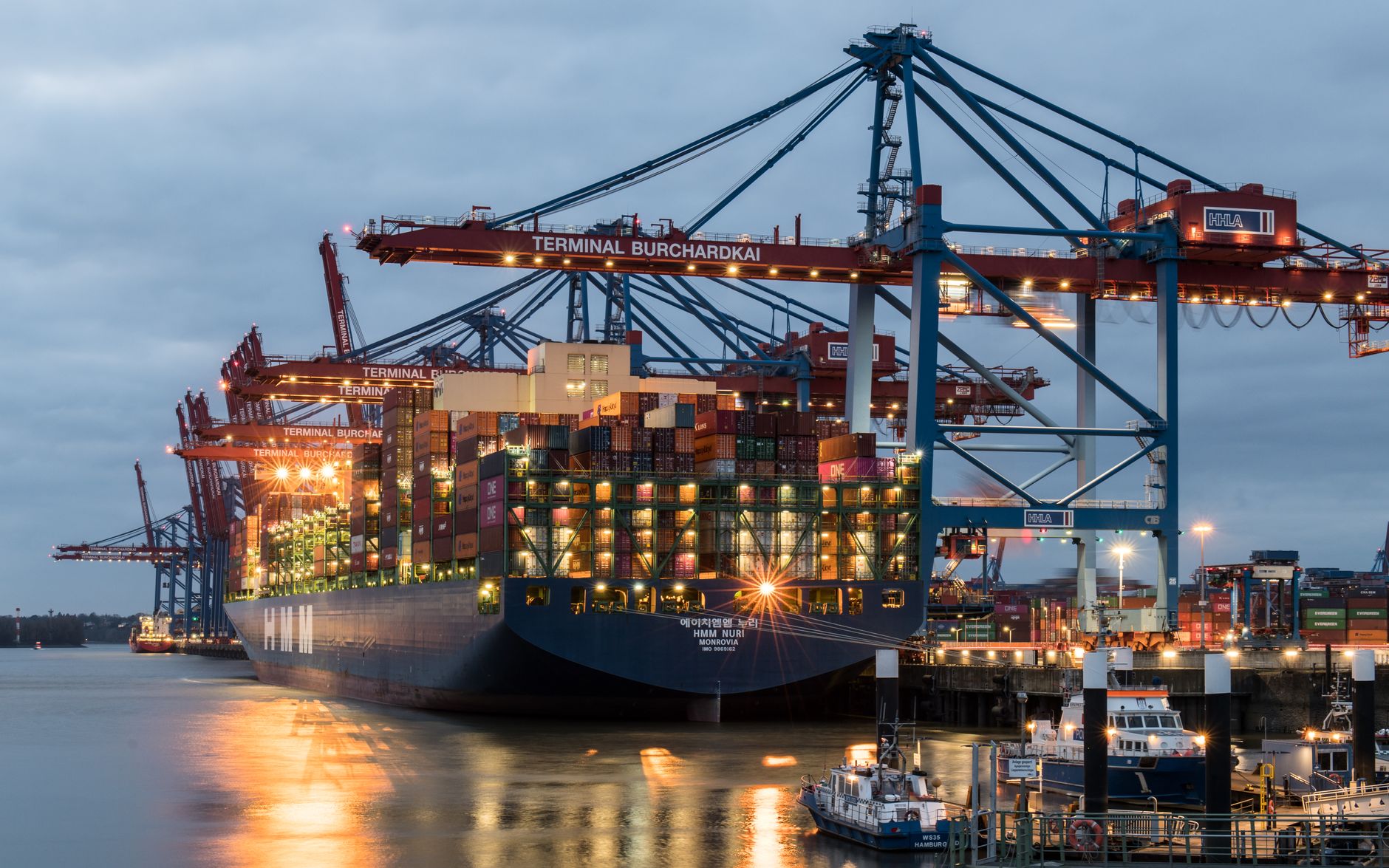
Under FOB, the exporter delivers the loaded container onto the vessel at a named Brazilian port, commonly the Port of Santos or Paranaguá. From that point ocean freight, marine insurance and destination charges are yours. FOB suits buyers who hold their own freight contracts and want to control routing and cost. The headline number looks lower than CIF, but remember it excludes the sea leg.
CIF (Cost, Insurance and Freight)
Under CIF, the exporter arranges and pays ocean freight and minimum marine insurance to your named destination port. The price is higher because it carries those costs, but it gives you a single delivered-to-port figure and less to organise. CIF suits buyers who prefer a turnkey landed price or who lack competitive freight rates of their own.
| Feature | FOB (named Brazilian port) | CIF (destination port) |
|---|---|---|
| Ocean freight arranged by | Buyer | Exporter |
| Marine insurance | Buyer | Exporter (minimum cover) |
| Risk transfers | On loading at origin | On loading at origin |
| Headline price | Lower (freight excluded) | Higher (freight included) |
| Best for | Buyers with their own freight rates | Buyers wanting a delivered price |
One point catches new buyers out: under both FOB and CIF the risk passes to the buyer once goods are loaded in Brazil. CIF means the exporter pays for freight and insurance, not that they carry the risk to your door. For onward planning, budget separately for destination port charges, customs duties and inland delivery, none of which sit inside a CIF price.
What drives the price of Brazilian chicken
Because a quote is a snapshot, it is worth knowing what moves the underlying market. Four forces do most of the work.
| Driver | Effect on price | Why it matters to buyers |
|---|---|---|
| Feed (corn and soy) | Largest single input; falling feed eases prices | Domestically grown, so Brazil avoids import dependency |
| Brazilian real (BRL) | A weaker real supports competitive FOB pricing | Currency swings can change a USD quote week to week |
| Global demand & market access | Open markets and strong demand lift prices | Disease status in any origin can redirect trade fast |
| Freight & seasonality | Reefer rates and peak seasons add or ease cost | Affects the gap between FOB and CIF numbers |
Feed costs
Feed, mainly corn and soybean meal, is typically the largest share of live-bird production cost. Brazil grows both crops at scale, so producers are not exposed to the import bills that raise costs in feed-deficit countries. When feed eases, as it did into early 2026, downward pressure flows through to export offers. (Confirm the latest feed trend before quoting long contracts.)
The Brazilian real
Most export contracts are priced in US dollars while costs are incurred in reais. A softer real lets exporters offer keen dollar prices without squeezing margin, which is a structural reason Brazilian chicken stays competitive. It also means a USD quote can shift with the exchange rate, so validity dates matter.
Global demand and market access
Prices respond to who is buying and which plants are approved to sell where. Animal-health status is central: an avian influenza case in any exporting country can open or close markets within days. Brazil managed a localised case in 2025, self-declared free of highly pathogenic avian influenza again, and saw major markets reopen, underlining how quickly access, and therefore price, can move. The Brazilian Animal Protein Association (ABPA) tracks these export dynamics.
Freight and seasonality
Reefer container rates, port congestion and seasonal demand peaks (festive seasons, Ramadan in relevant markets) all move landed cost. Freight is the main reason FOB and CIF numbers diverge, so a swing in ocean rates changes a CIF quote even when the product price has not.
How to read a frozen chicken export quote
A complete quote lets you compare offers fairly and plan cash flow. Check that it states:
- Exact product, grade, calibration and freezing format (IQF or block)
- Packing: net weight per carton, inner packing, master carton and pieces per pack
- Minimum order quantity, usually one full container (FCL)
- Incoterm and named port (for example FOB Santos or CIF Jebel Ali)
- Unit price and currency, plus price validity
- Plant SIF number and certification scope for your market
If any line is missing, ask before you compare, because an incomplete quote hides cost. You can start a fully specified request on our quote page.
Comparing quotes on landed cost
The cheapest FOB number is not always the cheapest delivered chicken. To compare fairly, build a landed cost for each offer: take the FOB or CIF price, add any freight and insurance not already included, then add destination port charges, customs duties, inland transport and your in-country cold storage. Two offers that look far apart at FOB can finish close together landed, and a slightly higher CIF from a reliable, well-documented plant often beats a cheap FOB that clears slowly. Because poultry ships by the full reefer, also confirm how the carton mix fills a 40' container so your per-kilo maths is accurate. Browse current products on the frozen chicken page or view SKUs such as frozen chicken leg quarters and frozen chicken wings.
Common pricing mistakes to avoid
- Comparing an FOB offer against a CIF offer as if they were the same number.
- Locking a long contract without checking the current feed and currency trend.
- Ignoring destination port charges, duties and inland costs that sit outside CIF.
- Accepting a price with no stated validity, then expecting it to hold weeks later.
- Chasing the lowest headline rate over plant approval, certification scope and reliability.
Conclusion
Brazilian poultry pricing is competitive by structure: home-grown feed, efficient processing, and a currency that favours exporters. But a price only helps you if you read it correctly. Fix the specification, know whether you are quoted FOB or CIF, watch the feed and real trends behind the market, and always compare on landed cost. Do that, and you turn Brazil's cost advantage into a real one on your own books. To understand supplier reliability behind the number, read more about Brazil Prime Foods.
Want current pricing? Request a quote and our export team will respond with FOB and CIF options, specifications and validity within 24 hours, or contact us with your target market and volumes.
Reading a poultry quotation line by line
FOB and CIF are not two prices for the same thing, they are two allocations of risk and cost. Under FOB the buyer controls the freight booking, pays ocean freight and insurance, and absorbs any delay after the container passes the ship's rail. Under CIF the seller arranges carriage and insurance to the named destination port, which simplifies buying but transfers the freight market risk into the unit price. When freight rates are volatile, a CIF quotation includes a cushion, and that cushion is invisible unless the buyer benchmarks it.
Normalising quotations for comparison
| Cost element | FOB Santos | CIF destination |
|---|---|---|
| Product and packing | Included | Included |
| Inland haulage and terminal | Included | Included |
| Ocean freight | Buyer | Seller |
| Marine insurance | Buyer | Seller |
| Import duty and clearance | Buyer | Buyer |
| Demurrage and detention at discharge | Buyer | Buyer |
Always convert both offers to a landed cost per kilogram of saleable product. That means adjusting for glaze percentage, expected trim or shrink, duty rate, port charges and financing cost of the letter of credit. A quotation that looks two percent cheaper on paper often loses that margin to a higher glaze allowance or a longer transit that consumes shelf life.
What drives Brazilian poultry price levels
Four inputs explain most movement. Corn and soymeal costs set the feed conversion floor, and Brazilian grain harvest cycles feed directly into slaughter economics. The exchange rate between the real and the dollar shifts competitiveness within weeks. Demand concentration matters as well, since large tenders from the Middle East and Asia absorb specific cuts and tighten availability of others. Finally, plant approval status by destination country determines how many establishments can serve a market, and a narrow approved list supports firmer prices.
Practical advice for buyers: fix volume in monthly tranches rather than one annual price, request the plant SIF number on every offer, and agree a written mechanism for freight adjustment if you buy CIF over a long period. Read more on plant approval in our SIF explainer, and see market specific requirements in the frozen chicken import guide. For a current indication, contact us through request a quote or contact us.
Frequently asked questions
- What is the difference between FOB and CIF for frozen chicken?
- Under FOB the exporter loads the container at a Brazilian port and you arrange ocean freight and insurance from there. Under CIF the exporter arranges and pays freight and minimum insurance to your destination port. Under both, risk passes to the buyer once goods are loaded in Brazil.
- Why is Brazilian chicken so competitively priced?
- Brazil grows its own corn and soy, so feed, the largest production cost, is not import-dependent. Efficient large-scale processing and a currency that often favours exporters keep dollar prices keen.
- What makes Brazilian poultry prices go up or down?
- Mainly feed costs (corn and soy), the Brazilian real against the US dollar, global demand and market access (including animal-health status), and freight and seasonality. These shift the market behind any individual quote.
- How long is an export price valid?
- A quote should state a validity date because prices move with feed, currency and freight. Always confirm the validity window before comparing offers or planning cash flow.
- Is FOB or CIF cheaper?
- FOB shows a lower headline price because it excludes the sea leg, while CIF includes freight and insurance. To compare fairly, build a full landed cost for each, adding destination charges, duties and inland delivery.
- What should a complete frozen chicken quote include?
- Product, grade, calibration and freezing format; packing and carton detail; minimum order quantity; Incoterm and named port; unit price, currency and validity; and the plant SIF number and certification scope for your market.
Frozen Chicken from Brazil
Brazilian frozen chicken for wholesale buyers, with specifications confirmed per order.
Explore frozen chickenReferences & further reading
Explore our export catalogue
Brazil Prime Foods Export coordinates frozen-meat sourcing and export for wholesale buyers in eligible markets. Confirm the supplying plant and documentation for your order.
Request support
Ask our export team about pricing, specifications, documentation or shipping for your order.
Request a QuoteContact us
Direct line to our trade desk in Brazil, calls, WhatsApp and email.
Contact our team