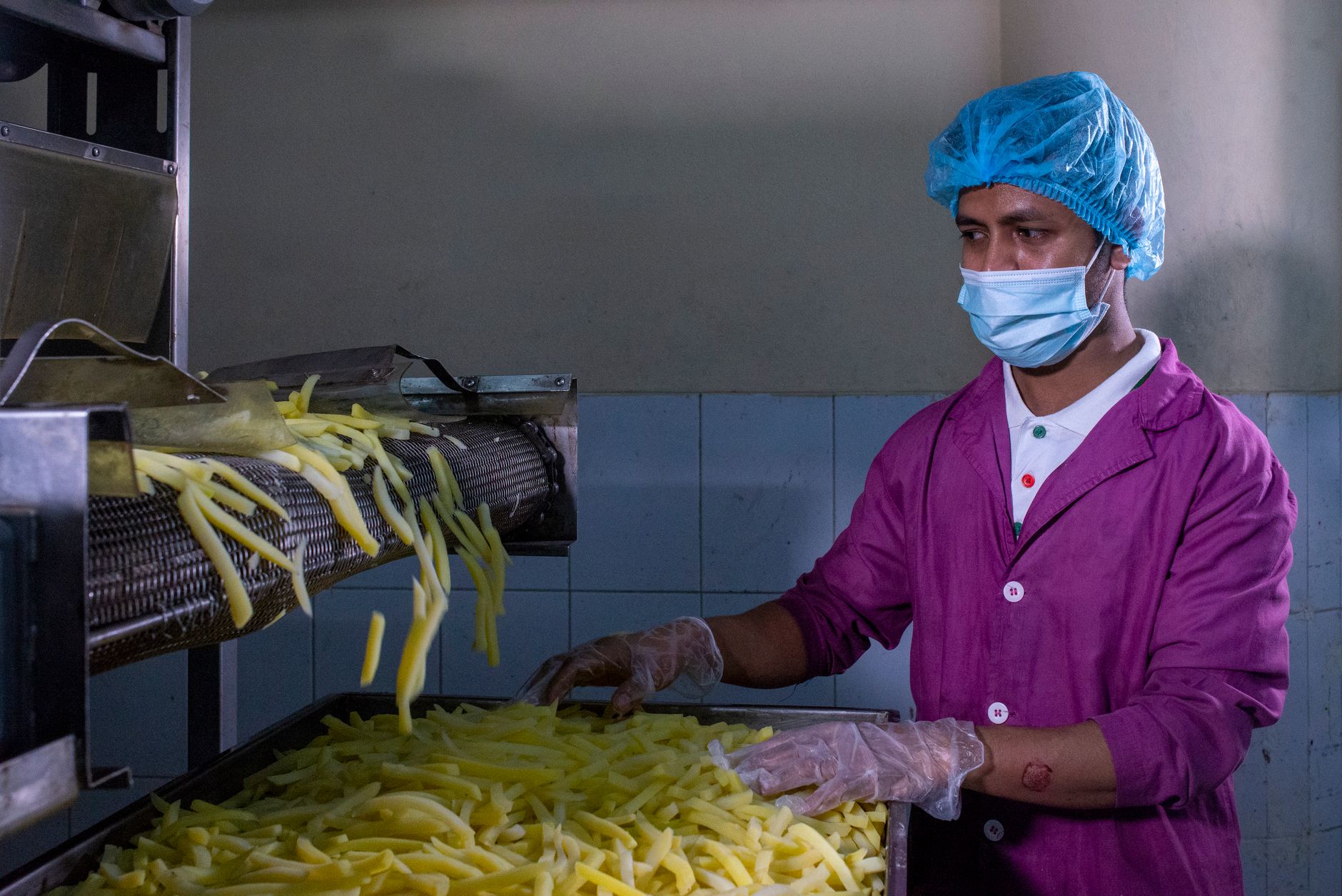
Inside a Brazilian chicken, beef or pork plant, HACCP is not a certificate on a wall, it is a documented plan that identifies every point in the process where a hazard could enter the product and assigns a control, a limit and a corrective action to that exact point. For importers, understanding how that plan actually runs day to day, rather than just knowing the acronym, is what separates a real compliance check from a box-ticking exercise.
Where HACCP Sits in Brazil's Inspection Framework
Brazil's federal meat inspection system is built on the Regulamento de Inspeção Industrial e Sanitária de Produtos de Origem Animal (RIISPOA), updated by Decree 9,013/2017. That regulation formally introduced modern self-control requirements, Good Manufacturing Practices, Standard Operating Procedures and Hazard Analysis and Critical Control Points, known in Portuguese as Análise de Perigos e Pontos Críticos de Controle (APPCC), as the technical backbone of every federally inspected plant. Oversight runs from the Ministry of Agriculture and Livestock (MAPA) through its Department of Inspection of Animal Origin Products (DIPOA), down to the plant-level Serviço de Inspeção Federal (SIF) team stationed on site. A plant cannot hold an active SIF registration without an operating HACCP plan, so the two are inseparable in practice. For background on what SIF registration itself authorizes, see our SIF certification explainer, and for a general introduction to the HACCP method, see what HACCP is and why it matters.
The Seven Principles, Applied on a Real Production Line
HACCP is built on seven internationally recognized principles, and in a Brazilian chicken, beef or pork plant they translate into specific, auditable steps rather than abstract theory:
- Hazard analysis: identifying biological risks such as Salmonella on raw poultry, chemical risks such as sanitizer residue, and physical risks such as bone fragments or metal at each stage from receiving through packing.
- Critical control points (CCPs): the exact steps where a hazard can be prevented or reduced to a safe level, commonly chilling and freezing temperatures, metal detection, and thermal processing for cooked or further-processed items.
- Critical limits: a numeric threshold at each CCP, for example a maximum core temperature after chilling or a minimum freezer temperature before loadout.
- Monitoring procedures: how and how often each CCP is checked, which in practice on a Brazilian export line typically means per-shift monitoring with logged readings.
- Corrective actions: the documented response when a limit is exceeded, such as segregating and re-evaluating product that failed a temperature check before it can be released.
- Verification: internal review that the plan is actually working, which most SIF-registered plants run on a recurring internal audit cycle, commonly quarterly, in addition to continuous SIF veterinary oversight.
- Record-keeping: the paper and digital trail, temperature logs, corrective action reports, calibration records, that lets a plant demonstrate compliance to MAPA inspectors and to destination-country auditors on request.
HACCP, SIF and Export Eligibility
Under RIISPOA Article 74, every federally registered plant must develop, implement and maintain its own self-control programs, with systematic and auditable records proving compliance, and HACCP is the central pillar of that requirement alongside Good Manufacturing Practices and sanitation procedures. This is why a valid SIF number on a health certificate is meaningful: it confirms the producing plant operates under continuous federal veterinary oversight built on top of a functioning HACCP plan, not a one-time inspection.
That plant-level HACCP performance also underpins bilateral export access. When the United States lifted its 2017 suspension on raw intact beef from Brazil in February 2020, it did so after an on-site audit confirmed Brazil's inspection system, including its HACCP-based process controls, was equivalent to the U.S. system, though shipments still undergo re-inspection at the U.S. port of entry. Equivalency findings, product eligibility and which plants are approved differ by destination country and can change over time, so importers should always confirm current status with the relevant authority, such as USDA FSIS's Brazil import library, rather than assuming blanket access.
How the Pieces Fit Together
| Element | What It Covers | Who Checks It |
|---|---|---|
| SIF registration | Legal authorization for the specific plant to slaughter, process and export | MAPA / DIPOA, continuous on-site presence |
| HACCP / APPCC plan | Documented hazard identification, CCPs, limits, monitoring and corrective actions | Plant quality team; verified by SIF and, for exports, destination-country auditors |
| GMP and SOPs | Baseline hygiene, sanitation and standard operating procedures underneath HACCP | Plant quality team, reviewed during SIF and internal audits |
| ISO 22000 / GFSI schemes | Optional management-system layer wrapped around HACCP for retail or foodservice buyers | Accredited third-party certification bodies |
What Importers Should Verify Before Ordering
A shipment's paperwork should trace back to one specific SIF-numbered plant, not a company name alone. Ask the exporter to confirm that plant number matches the health certificate and, where possible, request a summary of the HACCP CCPs relevant to the product you are ordering, for example chilling and metal detection for raw frozen cuts, or additional thermal-process CCPs for any cooked or breaded items. If your market requires halal product, remember that halal certification is a separate, parallel requirement to HACCP, not a substitute for it; our halal frozen chicken certification guide and certifications overview cover how the two layers relate.
A functioning HACCP plan is not something a plant can show you on request in the way a certificate is presented; it is something you verify indirectly, through a valid SIF number, consistent documentation, and a supplier willing to explain its control points rather than simply asserting compliance.
Documentation practices also vary by product category. Buyers sourcing Brazilian beef or Brazilian pork should request the same plant-specific traceability regardless of species, since the RIISPOA/HACCP framework applies uniformly across chicken, beef and pork establishments under DIPOA oversight.
Ready to Source With Verified Documentation
Brazil Prime Foods works only with SIF-registered, HACCP-compliant plants and provides the underlying documentation with every shipment. Visit our certifications page for the full list of plant approvals, or request a quote for frozen chicken, frozen beef or frozen pork matched to your destination market's requirements. For general background on our company, see About Brazil Prime Foods, or reach our team directly via contact.
Frequently asked questions
- Is HACCP mandatory for Brazilian meat plants?
- Yes. Under RIISPOA (Decree 9,013/2017), every federally registered plant must maintain a documented HACCP (APPCC) plan as part of its self-control programs, and an active SIF registration cannot be maintained without one.
- What are the seven HACCP principles?
- Hazard analysis, identifying critical control points, setting critical limits, establishing monitoring procedures, defining corrective actions, verification that the plan works, and record-keeping. Brazilian plants apply all seven under MAPA/DIPOA oversight.
- Does HACCP replace SIF registration?
- No. SIF is the federal registration that legally authorizes a specific plant to export. HACCP is the hazard-control plan that runs inside that registered plant. A plant needs both, and cannot hold SIF status without an operating HACCP system.
- How often is HACCP verified in Brazilian plants?
- Monitoring of critical control points typically happens every shift, with internal verification audits commonly conducted quarterly, in addition to continuous on-site oversight by SIF veterinary staff and periodic reviews by destination-country auditors for export-eligible plants.
- Does a Brazilian HACCP plan meet U.S. or EU requirements?
- Equivalency is assessed bilaterally and can vary by product and by plant. For example, the U.S. determined Brazil's inspection system for raw intact beef equivalent to its own in 2020 after an on-site audit, though shipments are still re-inspected at the U.S. port of entry. Buyers should confirm current eligibility for their specific product and destination with the relevant authority rather than assuming blanket equivalence.
- What should I ask an exporter to verify HACCP compliance?
- Request the SIF number of the specific plant producing your order and confirm it matches the health certificate, then ask which critical control points apply to your product category. A reliable exporter will explain its control points rather than offering only a general compliance statement.
References & further reading
Explore our export catalogue
Brazil Prime Foods Export ships SIF-certified product to wholesalers, distributors and foodservice operators worldwide.
Request support
Our export team replies within one business day, pricing, specs, documentation or shipping.
Request a QuoteContact us
Direct line to our trade desk in Brazil, calls, WhatsApp and email.
Contact our team