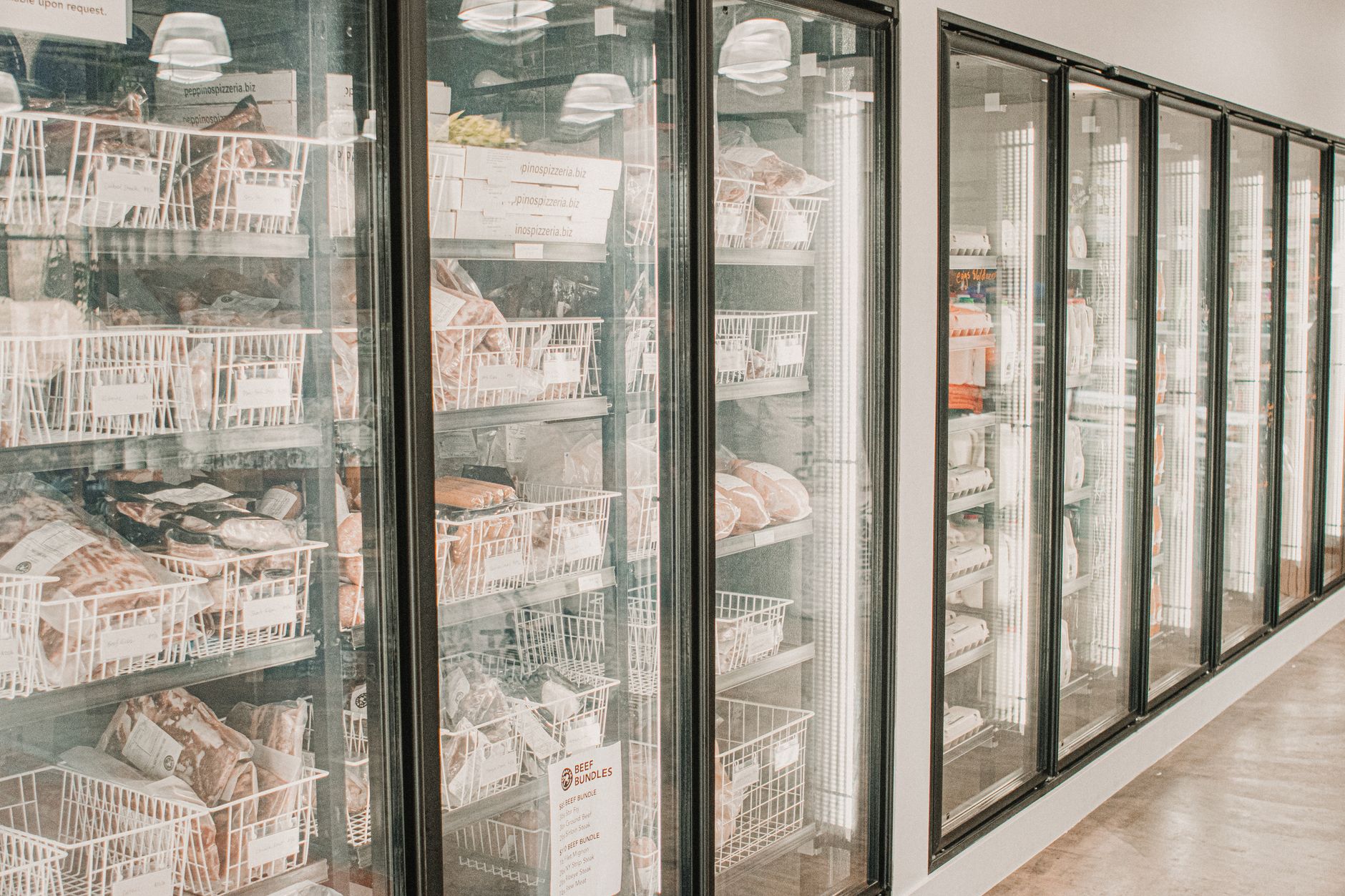
Supermarket chains source Brazilian frozen chicken, beef and pork by setting a retail specification first, then approving plants and packaging formats that meet it, and finally locking in supply through container-level contracts with consistent quality and labelling. Retail buyers face tighter rules than wholesalers: pack appearance, labelling, shelf life and supply continuity matter as much as price per tonne.
Why retail sourcing is different from wholesale
A wholesaler or distributor can often accept bulk cartons and repack locally. A supermarket chain usually cannot. Shelves, freezer cabinets, private label programs and food safety audits all demand predictable product. A missed delivery leaves an empty cabinet, and a labelling error can force a recall of an entire batch. That is why retail buyers should read this guide alongside our wholesale buyer's playbook, then add the retail-specific layers below.
Step 1: Write a retail specification
Start with the product and the way it will be sold. Decide whether the chain wants consumer packs, catering packs or bulk cartons for in-store repacking. For chicken, specify the cut, skin-on or skinless, bone-in or boneless, and whether the product is IQF or block frozen. IQF is usually preferred when shoppers or in-store staff need to take out a portion without thawing a whole block. For beef and pork, define the cut, trim level, fat cover, and whether the product is vacuum packed or bulk packed. Include carton weight, pieces per carton, and the minimum remaining shelf life you will accept at arrival.
Step 2: Approve plants for your market and your audit program
Every Brazilian plant that exports meat operates under federal inspection (SIF), supervised by the Ministry of Agriculture and Livestock (MAPA). Many importing countries then keep their own lists of eligible or registered establishments, so a plant approved for one market may not be approved for yours. Confirm the plant number is eligible for your country and product before you discuss price. Retail chains also typically require a recognised food safety scheme, such as a GFSI-benchmarked certificate, and many run their own supplier audits. Our guide to verifying an exporter's certifications shows how to check scope and expiry dates, and our certifications page lists what we hold.
Step 3: Get labelling and packaging right
Labelling is where retail shipments most often fail. The importing country's authority sets the rules, and they differ on language, country of origin, production and expiry dates, storage temperature and plant identification. Agree on the label artwork with your compliance team before production, not after loading. If the chain sells halal product, confirm that the halal mark and certificate match the plant and the production dates. For pork, remember that some markets restrict or prohibit it entirely, so confirm the destination rules first.
| Retail requirement | What to confirm with the exporter |
|---|---|
| Plant eligibility | Plant number listed for your country and product |
| Food safety scheme | Certificate scope, issuing body and expiry date |
| Labelling | Language, origin, dates, storage temperature, approved artwork |
| Packaging | Carton weight, pieces per carton, pack format, pallet pattern |
| Shelf life | Production date, minimum remaining life at arrival |
| Cold chain | Set point, temperature records, container condition |
Step 4: Plan shelf life and cold chain
Frozen meat is traded at around minus 18 degrees Celsius or colder, and retail buyers should require temperature records for the journey. Shelf life starts at production, not at arrival, so transit time directly reduces the sellable window. Our guide to shelf life and storage explains how storage conditions affect quality, and the pork packaging and cold-chain guide covers what good packaging looks like for a long voyage.
Step 5: Contract for continuity, not only price
Supermarkets run weekly promotions and cannot tolerate gaps. Instead of buying one container at a time on the spot market, consider a framework agreement with a defined specification, a schedule of shipments and a method for adjusting price. Agree clearly on how quality claims are handled: who inspects, what evidence is needed, and how fast the exporter must respond. Brazil's poultry association ABPA publishes export data and industry information that helps buyers understand supply and market conditions, but contract terms should always be written for your specific shipments.
Step 6: Start with a trial container
Before committing a chain-wide program, run a trial order. Inspect the product on arrival, compare the actual carton weights and labelling with the specification, review the temperature records, and have the quality team test the product in store. A good exporter will welcome this process, because a proven specification leads to repeat orders. When you are ready, you can review our frozen chicken, frozen beef and frozen pork ranges, or send your specification through our quote page.
Common mistakes retail buyers make
- Choosing on price alone. A cheaper offer from a trader who does not control the plant can cost more after a rejected shipment.
- Leaving labelling to the last minute. Artwork errors are expensive because they are found at the port, not at the factory.
- Ignoring transit time in shelf life. A long voyage can leave a retail chain with a short sellable window.
- Skipping the trial order. Specifications look identical on paper until the product is in your hands.
Retail sourcing rewards preparation. If you would like help translating a supermarket specification into an export-ready offer, contact our team with your target market, products and volumes, and we will respond with suitable options. The authority to check for plant lists and import conditions in Brazil is the Ministry of Agriculture and Livestock (MAPA).
Frequently asked questions
- Can supermarkets buy frozen meat directly from Brazilian exporters?
- Yes. Many chains buy directly or through importers. What matters is that the exporter controls or has a clear relationship with SIF-inspected plants that are eligible for your country and product.
- What packaging do supermarkets usually need?
- It depends on the program. Some chains want consumer packs or private label packs, while others buy bulk cartons and repack in store. Define pack format, carton weight and labelling before requesting quotes.
- Is IQF better than block frozen for retail?
- IQF is often preferred where portions need to be removed without thawing a whole block. Block frozen can suit processing or catering. The right choice depends on how the product will be sold or used.
- How important is shelf life for retail buyers?
- Very. Shelf life starts at production, so transit and storage time reduce the sellable period. Agree a minimum remaining shelf life at arrival and require temperature records.
- What certifications should a retail buyer ask for?
- Ask for SIF registration, a recognised food safety certificate such as a GFSI-benchmarked scheme with scope and expiry date, and halal certification if required. Verify each with the issuing body.
- Should a chain start with a trial container?
- Yes. A trial order lets your quality team check specification, labelling, cold chain records and product quality before committing to a larger program.
References & further reading
Explore our export catalogue
Brazil Prime Foods Export coordinates frozen-meat sourcing and export for wholesale buyers in eligible markets. Confirm the supplying plant and documentation for your order.
Request support
Ask our export team about pricing, specifications, documentation or shipping for your order.
Request a QuoteContact us
Direct line to our trade desk in Brazil, calls, WhatsApp and email.
Contact our team