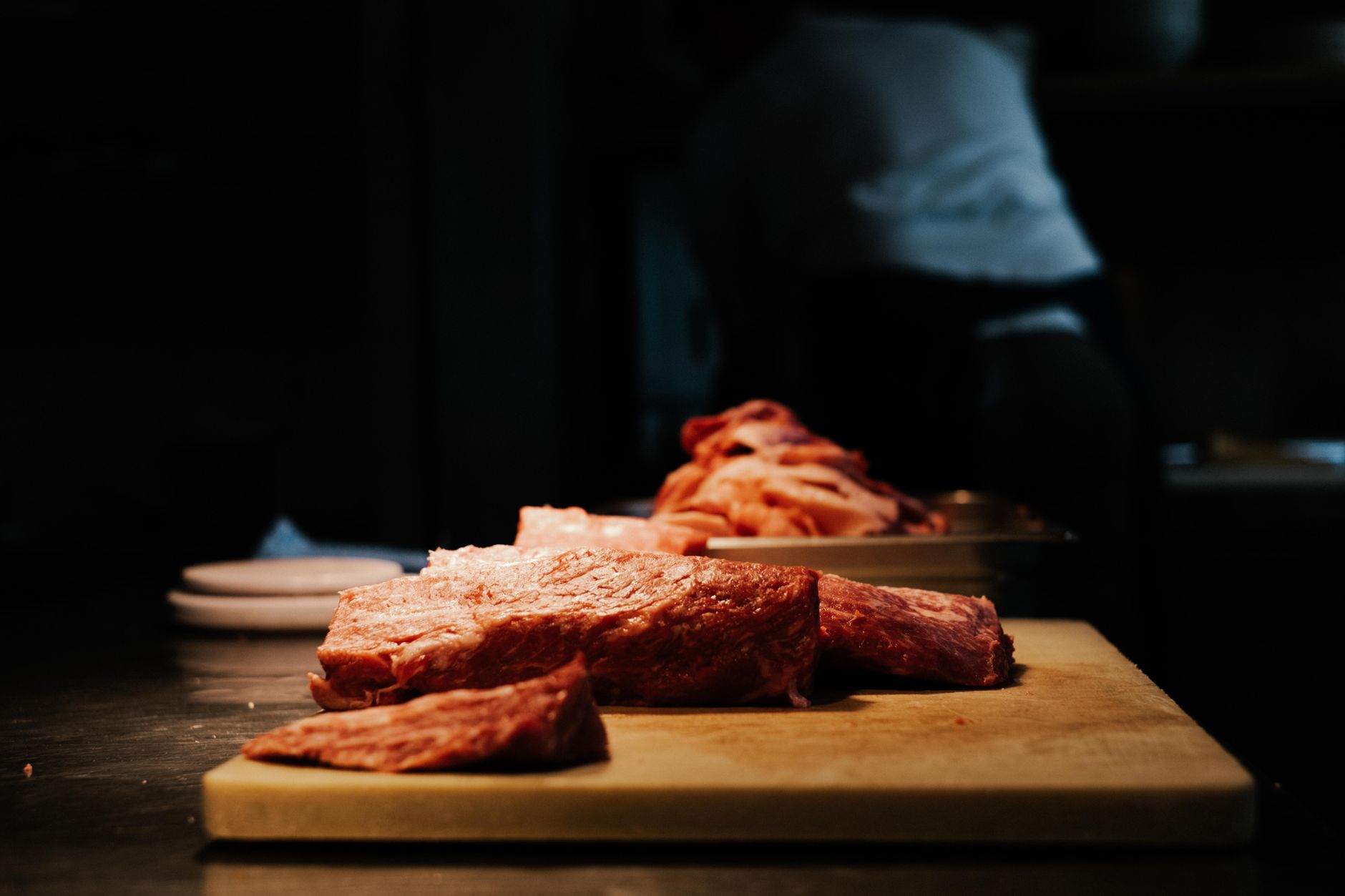
Brazil is one of the world's largest beef exporters, shipping to more than 170 countries, with China the leading single destination. For importers, wholesalers and HORECA buyers, that scale means a full carcass catalogue is available: forequarter cuts for braising and processing, hindquarter cuts for retail and roasting, premium muscles for steakhouses, and trimmings for grinding. The problem is that the same muscle can carry different names in different markets, and a vague specification leads to mismatched quotes and the wrong product on the pallet. This reference explains the main Brazilian beef export cuts, what each is used for, which markets buy them, and how to specify them so your quotes are comparable and your orders arrive as expected.
How a carcass is divided
A beef carcass is split into two sides, and each side is separated into a forequarter (the front section, including the shoulder, chuck, brisket and shin) and a hindquarter (the rear section, including the loin, rump and leg muscles). Forequarter muscles generally do more work in the living animal, so they are firmer, richer in connective tissue, and better suited to slow cooking and further processing. Hindquarter muscles are typically leaner, more tender and higher value. Trimmings, the offcuts generated when cuts are prepared, are collected and sold separately to a stated lean point for manufacturing. Understanding this split is the foundation for reading any beef quote.
Forequarter cuts
Forequarter cuts are the value engine of the beef trade: well priced, versatile and in constant demand across the Middle East, Africa and Asia for catering, braising and processing.
Chuck and shoulder clod
Taken from the shoulder, chuck and shoulder clod are firm, flavourful and well marbled for their price. They dice cleanly, braise well, and are widely used in foodservice, ready meals and further processing. For buyers who want consistent portions, specify the piece weight and whether you want it boneless and trimmed.
Brisket
Brisket comes from the lower chest and is prized across the Middle East and Asia for slow cooking, curing and foodservice. It is sold whole or split into the leaner flat and the fattier point. State whether you want the full packer brisket or a trimmed flat.
Shin and shank
Shin (front leg) and shank (rear leg) are lean, gelatin-rich cuts favoured for stews, soups and value catering. Sold bone-in or boneless, and often diced. They deliver body and flavour at an accessible price, which makes them a staple for large-volume caterers.
Hindquarter cuts
Hindquarter cuts are larger, leaner and more valuable, and they anchor retail programmes and roasting lines. The four that dominate export are the topside, silverside, knuckle and rump.
Topside and silverside
Both come from the rear leg. Topside is a large, lean, tender muscle ideal for roasting, slicing and deli. Silverside sits alongside it, slightly firmer, and is popular for roasting, corning and retail. Because both are big, uniform muscles, they slice into predictable retail packs, which is why they travel so well in frozen export.
Knuckle and rump
Knuckle (also called thick flank) is a lean, economical muscle for dicing, stir-fry strips and roasting. Rump is more tender and higher value, sitting between the loin and the leg, and suits both retail steaks and foodservice. Confirm the trim standard, because rump in particular is sold at several trim levels.
Premium loin muscles
The loin yields the highest-value muscles in the carcass, sold to steakhouses, premium retail and export foodservice.
- Striploin: the classic sirloin steak muscle, sold whole for portioning or pre-cut.
- Cube roll (ribeye): well marbled, the centrepiece of premium steak menus.
- Tenderloin (fillet): the most tender muscle, sold whole (PSMO, or peeled side muscle on) or fully trimmed.
When you buy premium muscles, the specification detail matters most: agree the trim (for example whether the tenderloin is side-muscle-on or fully denuded), the piece-weight band, and the grading or marbling expectation, so every case matches your menu.
Trimmings and manufacturing beef
Trimmings are sold to a stated chemical lean (CL) point, such as 90CL, 80CL or 65CL, meaning the percentage of lean to fat by the chemical-lean method (90CL is 90 percent lean). They feed grinding, burgers, meatballs and processed lines. When you order manufacturing beef, always confirm three things: the CL point, whether it is measured by chemical-lean testing or visual assessment, and the packing format (usually block-frozen in cartons). Getting these right protects your yield and your finished-product cost.
Quick-reference table
| Cut group | Examples | Typical use | Common markets |
|---|---|---|---|
| Forequarter | Chuck, shoulder clod, brisket, shin, shank | Braising, catering, processing | Middle East, Africa, Asia |
| Hindquarter | Topside, silverside, knuckle, rump | Roasting, retail, foodservice | Europe, Asia, Middle East |
| Premium loin | Striploin, cube roll, tenderloin | Steakhouse, premium retail | Gulf, Asia, Europe |
| Trimmings | 90CL, 80CL, 65CL manufacturing beef | Grinding, burgers, processing | Global |
How to specify a beef cut correctly
A precise specification is what turns a rough enquiry into a comparable quote. For any cut, state:
- Cut name and any market alias you use, to avoid naming confusion.
- Bone-in or boneless, and the trim standard.
- Piece weight or calibration band, so retail packs and foodservice portions stay consistent.
- Production system (grass-fed or grain-finished) where it matters to your customer.
- Packing: individual vacuum, interleaved or block, plus carton net weight.
- For trimmings: the CL point and lean-measurement method.
The clearer your specification, the fewer surprises at destination. Our companion guide to importing Brazilian frozen beef covers certification, Incoterms and cold chain, and you can browse the live range on the frozen beef page.
Matching cuts to your market
The right cut depends on your customer. Value caterers and processors lean on forequarter cuts and trimmings; supermarkets and roasting programmes want topside, silverside and knuckle; steakhouses and premium retail want loin muscles. Many importers combine cut groups in a single container to balance cost and margin. If you are not sure how a carton mix fills a reefer, ask your supplier to model it against a 40' container so you can compare landed cost per kilo across cut groups. You can see how we work about Brazil Prime Foods, or send your target cuts through the quote page and our team will match them to SIF-approved plants.
Certification still applies to every cut
Whichever cut you buy, the same compliance baseline applies. The producing plant must carry SIF registration under Brazil's Federal Inspection Service, be approved to export to your destination, and hold halal certification recognised in your market where required. Our certifications page maps each seal to its markets, and the FAQ answers the questions buyers ask most often. Data on Brazilian beef and its export cuts is published by the Brazilian Beef Exporters Association (ABIEC), and plant approvals are administered by MAPA.
Conclusion
Knowing your cuts is the fastest way to buy Brazilian beef well. Forequarter cuts drive value catering and processing, hindquarter cuts anchor retail and roasting, loin muscles serve premium foodservice, and trimmings feed grinding, each with its own naming, uses and markets. Specify the cut name, trim, weight band and packing precisely, confirm SIF and halal for your destination, and your quotes will be comparable and your containers predictable.
Ready to source specific cuts? Request a quote with your target cuts and specifications, and our export team will respond with FOB/CIF pricing within 24 hours, or contact us with your requirements.
Matching Brazilian cuts to destination demand
Brazilian beef is exported under a cut nomenclature that does not map one to one onto local butchery traditions, which is the main source of confusion for first time buyers. A cut described as a hindquarter primal in Brazil may arrive as several sub primals in the carton, each with its own trim level. The practical fix is to buy against a written specification that names the muscle, the trim in millimetres of fat cover, and the target piece weight range, rather than a market name alone.
Common export cuts and their usual destination use
| Cut | Typical piece weight | Common use |
|---|---|---|
| Striploin | 3 kg to 5 kg | Steakhouse and retail steaks |
| Tenderloin | 1.8 kg to 2.5 kg | Fine dining, premium retail |
| Knuckle | 3 kg to 5 kg | Roasts, dice, slow cook lines |
| Inside skirt and flank | 1 kg to 2 kg | Grill formats and street food |
| Shin and shank | 1.5 kg to 3 kg | Stews and broth production |
| Forequarter trimmings | Bulk | Grinding at fixed lean point |
Specification points that protect value
Three fields decide whether a cut arrives as expected. Trim level should be stated as maximum fat thickness and whether the cut is denuded or peeled, because a difference of five millimetres changes usable yield by a measurable percentage. Ageing status should be stated, since chilled vacuum packed primals continue to age in transit while frozen cuts do not. Lean point should be stated for any trimming or grinding material, expressed as chemical lean tested by the plant, with a tolerance and a retest method.
Packaging follows the cut. Premium steak primals travel vacuum packed and boxed with a shipping mark that identifies the muscle, while bulk manufacturing beef is often block frozen for cube efficiency. Compare those options in our note on vacuum packed versus bulk frozen beef and check the temperature decision in chilled versus frozen beef export.
Every carton should carry the establishment SIF number, lot code and production date so the cut can be traced to a single shift. That is what allows a targeted response if a quality question appears at the shelf, instead of holding an entire container. To specify cuts for your market, browse frozen beef and send a request for quotation.
Frequently asked questions
- What is the difference between forequarter and hindquarter beef cuts?
- Forequarter cuts (chuck, shoulder, brisket, shin, shank) come from the front of the carcass, are firmer and richer in connective tissue, and suit braising, catering and processing. Hindquarter cuts (topside, silverside, knuckle, rump) come from the rear, are leaner and more tender, and suit roasting, retail and foodservice.
- What are the main premium Brazilian beef cuts?
- The premium muscles come from the loin: striploin (sirloin), cube roll (ribeye) and tenderloin (fillet). They are sold to steakhouses, premium retail and export foodservice, and specification detail like trim and piece weight matters most for these.
- What does 90CL mean for beef trimmings?
- CL stands for chemical lean. 90CL means 90 percent lean to 10 percent fat, measured by the chemical-lean method. Trimmings are sold to a stated CL point (for example 90CL, 80CL or 65CL) for grinding, burgers and processed lines.
- What is the difference between topside and silverside?
- Both come from the rear leg. Topside is a large, lean, tender muscle ideal for roasting and slicing. Silverside sits alongside it, is slightly firmer, and is popular for roasting, corning and retail. Both slice into uniform retail packs, which makes them well suited to frozen export.
- How should I specify a beef cut when requesting a quote?
- State the cut name and any market alias, bone-in or boneless, the trim standard, the piece-weight or calibration band, the production system (grass-fed or grain-finished) where relevant, and the packing format. For trimmings, add the CL point and lean-measurement method.
- Are all Brazilian beef cuts available halal certified?
- Many Brazilian plants run halal slaughter across the full cut range and are certified by bodies recognised in the GCC and across Asia. Always confirm the specific certificate matches your destination and that the producing plant is SIF-registered and approved to export there.
Frozen Beef from Brazil
Brazilian frozen beef for wholesale buyers, with specifications confirmed per order.
Explore frozen beefReferences & further reading
Explore our export catalogue
Brazil Prime Foods Export coordinates frozen-meat sourcing and export for wholesale buyers in eligible markets. Confirm the supplying plant and documentation for your order.
Request support
Ask our export team about pricing, specifications, documentation or shipping for your order.
Request a QuoteContact us
Direct line to our trade desk in Brazil, calls, WhatsApp and email.
Contact our team