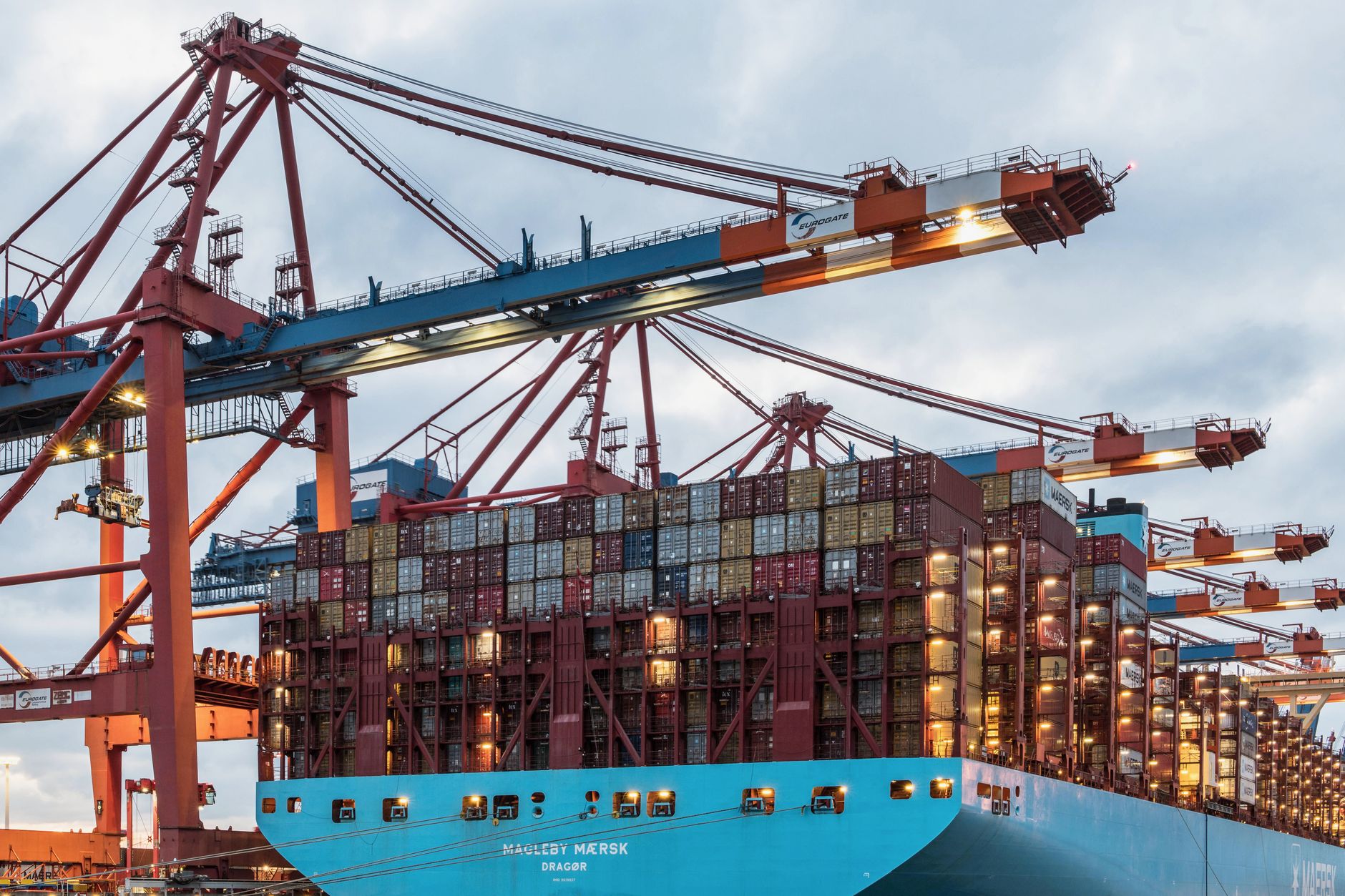
Incoterms 2020 decide where the seller's responsibility for a frozen meat shipment ends and yours begins, covering cost, risk and who arranges carriage, insurance and customs formalities, but they do not decide ownership, payment terms or who is at fault when a reefer container arrives warm. For importers buying Brazilian frozen chicken, beef or pork, choosing the wrong rule is one of the quietest and most expensive mistakes in a contract. This guide explains how FOB, CFR, CIF and DAP work in practice for containerised frozen cargo, and which rule fits which kind of buyer.
What an Incoterm actually decides
An Incoterms rule is a three letter shorthand, agreed in the sales contract, that answers four questions at once. Who arranges and pays for carriage. Who arranges and pays for insurance, if anyone. Who handles export and import formalities. And, most importantly, at what precise point risk of loss or damage passes from seller to buyer.
Just as important is what the rule does not do. An Incoterm does not transfer legal title, which is governed by the sale contract and the applicable law. It does not set payment terms, so CIF tells you nothing about whether you are paying by letter of credit or telegraphic transfer. And it does not replace the specification, the temperature requirement or the documentary package.
A practical way to read any Incoterms rule: the letter group tells you the shape of the deal. E terms are collection at the seller's premises, F terms mean the buyer contracts the main carriage, C terms mean the seller contracts and pays the main carriage but risk still passes early, and D terms mean the seller carries risk all the way to a named destination.
Eleven rules, split by transport mode
Incoterms 2020 contains eleven rules. Seven are written for any mode or modes of transport, and four only for sea and inland waterway transport. That split matters more for frozen meat than most buyers assume, because Brazilian chicken, beef and pork move in refrigerated containers rather than as bulk cargo loaded loose into a hold.
| Group | Rules | Written for |
|---|---|---|
| Any mode or modes of transport | EXW, FCA, CPT, CIP, DAP, DPU, DDP | Container, road, rail, air and multimodal movements |
| Sea and inland waterway only | FAS, FOB, CFR, CIF | Bulk and break bulk cargo loaded directly onto a vessel |
The four sea rules were designed for loose cargo swung over the ship's side. A reefer container, by contrast, is handed over at a terminal gate or container yard days before the vessel sails, which creates the mismatch described below.
FOB, CFR and CIF in frozen meat practice
These three rules dominate quoted prices for Brazilian protein, and they form a ladder. Under FOB, the seller clears the goods for export and delivers them on board the vessel at the named Brazilian load port. You book the ocean carriage, you pay the freight, and risk sits with you from the moment the cargo is on board. Under CFR, the seller additionally contracts and pays for carriage to the named destination port, but risk still passes at the load port, not on arrival. Under CIF, the seller does everything in CFR and also buys marine cargo insurance for your benefit, while risk again passes at the load port.
The point importers most often miss is that C terms are not delivered terms. A CIF price sounds like the seller is responsible until the goods reach you. It is not. If the vessel is delayed, the container is rolled, or the cargo is damaged in transit, the goods are already at your risk and your remedy is an insurance claim, not a claim against the exporter. Our explainer on Brazilian poultry pricing across FOB and CIF covers the commercial side.
Why the ICC points container shippers to FCA, CPT and CIP
The ICC has for several editions recommended that containerised cargo use FCA, CPT or CIP rather than FOB, CFR or CIF, and it repeats that guidance in the Incoterms 2020 introduction. The reasoning is operational. With FOB, the seller stays at risk until the container is on board, yet the container has usually been surrendered to the terminal days earlier and the seller has no physical control over it while it sits in the stack. FCA closes that gap by transferring risk when the goods are handed to the carrier or the nominated place, which reflects what actually happens.
The historical objection to FCA was documentary. Banks financing shipments under letters of credit typically wanted an on board bill of lading, which FCA did not naturally produce. Incoterms 2020 addressed this by adding an optional mechanism under which the parties can agree that the carrier will issue a transport document to the seller with an on board notation, removing the main reason exporters defaulted to FOB for boxed cargo.
In practice many frozen meat contracts still use FOB, CFR and CIF because the trade is used to them. That is workable, provided both sides understand that risk passes at the load port and that the yard period before loading is a real exposure. For a new relationship, FCA and CIP are the cleaner fit.
The insurance level hidden inside CIF
CIF and CIP both oblige the seller to insure, but not to the same standard. Under CIF the required minimum is the restricted cover of the Institute Cargo Clauses (C) or similar, which responds to a defined list of major casualties such as fire, explosion, stranding and sinking. It is not designed to answer ordinary handling damage, water ingress, theft or pilferage. Incoterms 2020 raised the CIP requirement to the broader Institute Cargo Clauses (A) or similar. In both rules the customary insured value is 110 percent of the contract value of the goods.
For frozen cargo this matters. A reefer machinery breakdown, or a plug left disconnected during transhipment, is the kind of loss restricted cover may not reach. Buyers accepting a CIF price should either specify a higher level of cover in the contract or arrange a supplementary policy, and should confirm whether it includes a refrigerated machinery breakdown extension. Read that alongside our guidance on reefer container temperatures for frozen meat.
DAP, DPU and DDP: the delivered rules
The D group shifts risk much further down the chain. Under DAP, Delivered at Place, the seller bears cost and risk until the goods arrive at the named destination ready for unloading, and the buyer handles import clearance and duties. DPU, Delivered at Place Unloaded, replaced the former DAT rule in the 2020 edition and adds unloading to the seller's account. DDP, Delivered Duty Paid, adds import clearance, duties and taxes, making it the only rule under which the seller normally acts as importer at destination.
DDP is rarely appropriate for frozen meat. Importing animal products almost always requires an import permit, an approved importer registration and a veterinary border inspection, all of which practically require a local entity. Buyers asking for DDP on a reefer container of chicken are usually better served by DAP plus a clear allocation of who handles sanitary clearance. See our export documentation checklist for what has to be in place before the container moves.
Where the Incoterm meets the cold chain
An Incoterms rule allocates risk. It does not specify temperature. That has to be written separately into the contract, and the two need to line up. If you buy CFR, risk passes at the Brazilian load port, so a clause obliging the exporter to deliver at the correct core temperature at loading is consistent. If you want the exporter to answer for arrival temperature, you need either a D term or an express warranty about condition on arrival, because the Incoterm alone will not give you that.
Three clauses are worth writing alongside the rule: the container set point and required core temperature at loading, an obligation to fit and download a data logger, and an agreed allocation of demurrage and detention at destination. Our guides to container loading and stowage and demurrage and detention in cold chain delays cover the operational detail.
Choosing a rule: a short checklist
- If the cargo is containerised, prefer FCA, CPT or CIP, and treat FOB, CFR or CIF as convention rather than a technically correct fit.
- Name the place and the version year precisely, for example CIF Jebel Ali, Incoterms 2020.
- Decide who is better placed to book reefer space. Regular importers with carrier contracts usually do better on FCA or FOB.
- Check the insurance level and extend it if the rule only requires restricted cover.
- Confirm the importer of record and the import permit holder before considering any D term.
- Write the temperature, logger and documentary obligations separately from the Incoterm.
Terminology is standardised by the International Chamber of Commerce, and Brazilian export practice and trade promotion guidance is published by ApexBrasil. Rules and market requirements change, so confirm the current position with your own freight forwarder and the importing authority before contracting.
Work with us on terms that suit your operation
Brazil Prime Foods Export quotes frozen chicken, frozen beef and frozen pork on the rule that fits your route and clearance capability, with load port, temperature and documentary requirements confirmed in writing before booking. Request a quote with your destination port and preferred rule, or contact our trade desk.
Frequently asked questions
- Do Incoterms decide who owns the goods?
- No. Incoterms allocate cost, risk and responsibility for carriage, insurance and customs formalities. Transfer of legal title is governed by the sale contract and the applicable law, and payment terms are set separately. A rule such as CIF tells you nothing about whether you are paying by letter of credit or telegraphic transfer.
- What is the difference between CFR and CIF?
- Under both rules the seller contracts and pays for ocean carriage to the named destination port, and risk passes to the buyer at the load port. CIF adds an obligation on the seller to buy marine cargo insurance for the buyer's benefit. CFR does not, so under CFR the buyer should arrange its own cover.
- Why does the ICC recommend FCA instead of FOB for containers?
- Under FOB the seller remains at risk until the goods are on board, but a container is usually handed to the terminal days before the vessel sails, so the seller carries risk over a period it cannot control. FCA transfers risk when the goods are handed to the carrier, which reflects what actually happens with containerised cargo.
- Is the insurance under CIF enough for frozen meat?
- Often not. CIF requires only the restricted cover of Institute Cargo Clauses (C) or similar, which responds to a defined list of major casualties rather than ordinary handling damage, water ingress or theft. CIP requires the broader Clauses (A). Buyers on CIF should specify higher cover in the contract or arrange a supplementary policy, ideally including a refrigerated machinery breakdown extension.
- Should I buy Brazilian frozen meat on DDP terms?
- Usually no. Importing animal products normally requires an import permit, an approved importer registration and a veterinary border inspection in the destination country, all of which practically require a local entity. DAP, with a clear allocation of who handles sanitary clearance, is generally the better delivered term for frozen meat.
- Does the Incoterm cover the container temperature?
- No. Incoterms allocate risk, not technical specification. The container set point, the required core temperature at loading, the data logger obligation and the allocation of demurrage and detention all need to be written into the contract separately, and they should be consistent with the risk transfer point the chosen rule creates.
References & further reading
Explore our export catalogue
Brazil Prime Foods Export coordinates frozen-meat sourcing and export for wholesale buyers in eligible markets. Confirm the supplying plant and documentation for your order.
Request support
Ask our export team about pricing, specifications, documentation or shipping for your order.
Request a QuoteContact us
Direct line to our trade desk in Brazil, calls, WhatsApp and email.
Contact our team