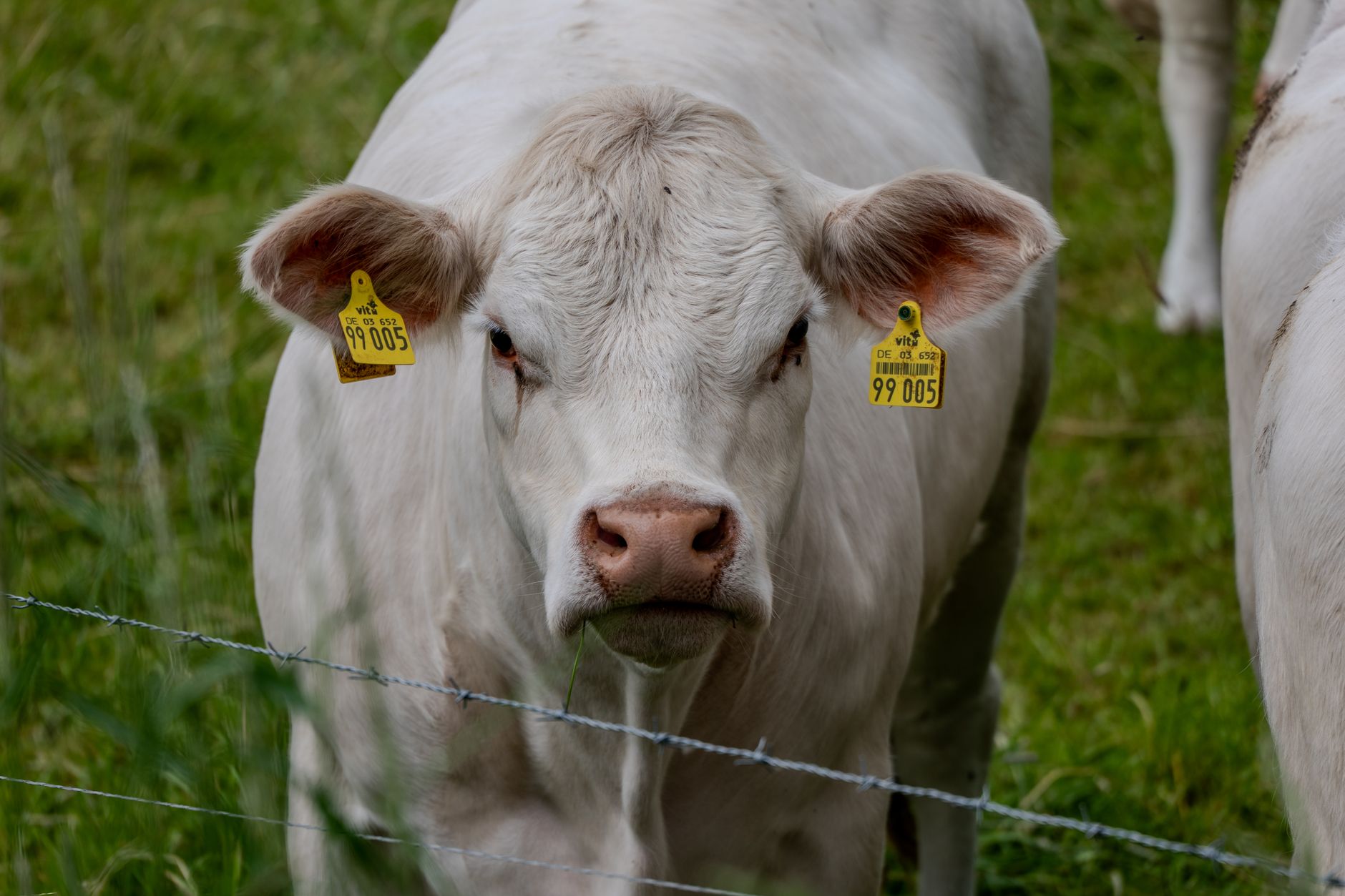
Traceability in Brazilian food exports means that every carton of frozen chicken, beef, or pork can be linked backwards to the plant, the production lot, the slaughter date, and the animals or flocks that produced it, and forwards to the buyer it was shipped to, using records the exporter must be able to retrieve on request. For an importer, that is not an abstract compliance idea. It is the difference between a quality problem you can isolate to one pallet and a problem that forces you to hold everything you have in cold storage.
What Traceability Actually Means in a Meat Export Context
Food traceability is usually described as the ability to move one step back and one step forward through the supply chain. Each operator must know who supplied their inputs and who received their output. That principle is written into European Union food law under Article 18 of Regulation (EC) No 178/2002, and most major importing jurisdictions have adopted some version of it since the early 2000s.
Applied to Brazilian frozen meat, the chain has three distinct layers, and buyers who check only one of them are exposed. The first layer sits upstream of the plant: the farms, the herds or flocks, and the animal movement records. The second sits inside the plant: the production lot, the date, the line, and the packaging codes. The third sits downstream: the export documentation, the container, and the cold chain records that follow the cargo to your port.
A supplier with genuinely working traceability can connect all three. A supplier with weak traceability can usually show you the middle layer only, because a carton label is easy to produce and farm level records are not.
The Brazilian Layer: Federal Inspection, Animal Movement, and Herd Identification
The SIF number is the anchor
Every establishment approved to produce meat for export in Brazil operates under the Serviço de Inspeção Federal, the federal inspection service run by the Ministry of Agriculture and Livestock, known as MAPA. Each approved plant carries a unique SIF number, and that number appears on the carton, on the health certificate, and in the list of establishments approved for your destination market. It is the single most useful identifier you have, because it ties a shipment to a specific inspected facility rather than to a trading company name. If this is new to you, our explainer on what SIF certification is covers how the number is issued and what it does not cover.
Animal movement and origin records
Livestock moving between rural properties and to slaughter in Brazil travels under official animal movement documentation issued by state agricultural authorities within a federally supervised framework. These records establish where an animal came from, when it moved, and its sanitary status at the time of movement. For beef and pork, they are the foundation of any origin claim. For poultry, the equivalent control sits at flock and integrated producer level, since birds are typically raised under contract inside a vertically integrated system where the processor supplies the chicks and the feed and already holds the placement and harvest records.
Individual identification where the market requires it
Brazil operates SISBOV, the official system for identifying and registering cattle and buffalo, administered by MAPA and executed through accredited certifying organisations. Participation is voluntary for the general national herd, but individual identification and registration become effectively mandatory for cattle destined for markets that demand controlled origin, the European Union being the long standing example. Under that system, animals are individually identified, registered on approved properties, and subject to residency conditions before slaughter.
Two practical points for buyers. First, SISBOV is a cattle system, so do not expect a poultry or pork supplier to reference it. Second, whether your shipment needs SISBOV traced cattle depends on your destination market, not on the exporter's preference. If your market does not require it, an exporter is not doing anything wrong by supplying cattle outside the system, and you should not pay a premium for a control your own authority never asks about.
The Plant Layer: Lot Codes and Production Records
Inside the plant, traceability is carried by the production lot. A lot groups product made under comparable conditions, typically within a defined production date, shift, and line. Every carton in that lot carries a code tying it to the batch records: raw material received, process parameters, quality checks, freezing and storage, and the finished goods inventory it entered.
What you should see on a carton from a competent Brazilian exporter is a combination of the SIF number, the product description and cut code, the production date, an expiry or best before date, net and gross weight, and a lot or batch identifier. That last field is the one buyers most often ignore and most often need. Without it, a quality complaint cannot be isolated, and you end up negotiating over an entire container when the issue affects one pallet.
The plant layer is also where food safety systems live. HACCP records, internal audits, and any private scheme certification are organised around production lots, which is why a plant with disciplined HACCP implementation almost always has clean traceability as a by-product. The reverse holds too: weak lot control is usually a symptom of something larger.
The Shipment Layer: Documents, Container, and Cold Chain
Once cargo leaves the plant, traceability shifts to documentation. The sanitary or veterinary health certificate issued by MAPA identifies the establishment, the product, the quantity, the destination, and, on most formats, the production lots or shipping marks that let an inspector reconcile paper to pallet. The commercial documents, packing list, invoice, and bill of lading carry the same shipping marks and container number. Our guide to Brazilian meat export health certificates walks through how those fields line up.
The container adds its own record. Reefer temperature logs, the seal number, and the loading record connect the physical cargo to a specific voyage and a specific set of conditions. If a shipment arrives with a temperature complaint, the ability to pull the download from that container, matched to the lots inside it, is what settles the claim. For background on the equipment, see our explainer on reefer containers and the wider piece on cold chain logistics for frozen meat.
| Layer | Key identifier | Ask your exporter for |
|---|---|---|
| Farm, herd or flock | Animal movement records, SISBOV where applicable | Confirmation that supply farms meet your market's origin conditions |
| Plant | SIF establishment number | The SIF number plus confirmation it is listed for your destination |
| Production | Lot or batch code, production date | A sample carton label with the lot code format explained |
| Shipment | Health certificate number, shipping marks | Draft certificate and packing list before shipment |
| Transport | Container and seal number, temperature log | Reefer setpoint confirmation and the log download on arrival |
What Your Import Market Expects
Traceability requirements are set by the importing country, not by Brazil, and they vary widely. European Union rules apply the one step back, one step forward duty to the importer itself, which means your own records matter as much as your supplier's. Several Middle East and Asian markets attach traceability conditions to plant approval, so the practical requirement is that you buy only from establishments listed for that market. Halal markets add a parallel chain of custody, because a halal claim has to survive slaughter, processing, storage, and transport without commingling, a point covered in our article on halal integrity through the cold chain.
Because these rules change, treat plant approval lists and certificate templates as live documents. Confirm the current position with your customs broker or competent authority before fixing a contract, rather than relying on what applied to a shipment last year.
How to Test a Supplier's Traceability Before You Order
You do not need an audit to get a useful signal. Ask four questions and watch how quickly the answers come back.
- Which SIF number will produce my order, and is that establishment currently listed for my destination market?
- Show me a sample carton label and explain each field, including the lot code.
- If I report a defect three months after arrival and give you the lot code, what can you tell me and how long will it take?
- Which documents will accompany the shipment, and can I see blank or historical samples now?
An exporter working with real plants answers all four in a single email. An intermediary who has never seen the production floor hesitates on the third. Weight that question most heavily, because it tests retrieval rather than presentation.
For a broader due diligence framework, our checklist on verifying an exporter's certifications applies the same discipline to certificates rather than lots.
Where Brazil Prime Foods Fits
We supply frozen chicken, frozen beef, and frozen pork from federally inspected Brazilian plants, and we provide the SIF number, label format, and document set for a specific order before you commit to it. If you are qualifying a new supply line, tell us the destination market and the products you need, and we will confirm what traceability documentation applies. You can request a quote or contact our team, and our certifications page summarises the standards our supply partners work under.
Frequently asked questions
- What is the difference between traceability and certification?
- Certification tells you a system was assessed against a standard at a point in time. Traceability tells you what actually happened to a specific lot of product. A plant can hold valid certificates and still be slow at retrieving records for one batch, which is why buyers should test both.
- Does every Brazilian meat exporter use SISBOV?
- No. SISBOV covers cattle and buffalo, and it is voluntary for the general herd. It becomes a practical requirement for cattle supplying markets that demand controlled origin, notably the European Union. Poultry and pork are traced through flock, herd and plant records instead.
- What should appear on a frozen meat carton for traceability?
- At minimum the SIF establishment number, product description and cut code, production date, expiry or best before date, net and gross weight, and a lot or batch identifier. The lot code is the field that makes an isolated investigation possible later.
- How far back can a Brazilian plant trace a shipment?
- Record retention periods vary by plant, by certification scheme and by destination market requirement, and they generally extend well beyond the shelf life of the product. Ask your supplier to state the retention period in writing rather than assuming it.
- Who is responsible for traceability once the goods reach my warehouse?
- You are. Most importing regimes place a duty on the importer and every subsequent operator to record who supplied the goods and who received them. Keeping lot codes attached to your own inventory records is what makes that duty possible to meet.
- Can traceability records help with a quality claim?
- Yes, and they are usually decisive. A claim supported by the lot code, the container and seal number, and the reefer temperature download can be investigated precisely. A claim without those details tends to become a commercial negotiation rather than a technical one.
References & further reading
Explore our export catalogue
Brazil Prime Foods Export ships SIF-certified product to wholesalers, distributors and foodservice operators worldwide.
Request support
Our export team replies within one business day, pricing, specs, documentation or shipping.
Request a QuoteContact us
Direct line to our trade desk in Brazil, calls, WhatsApp and email.
Contact our team