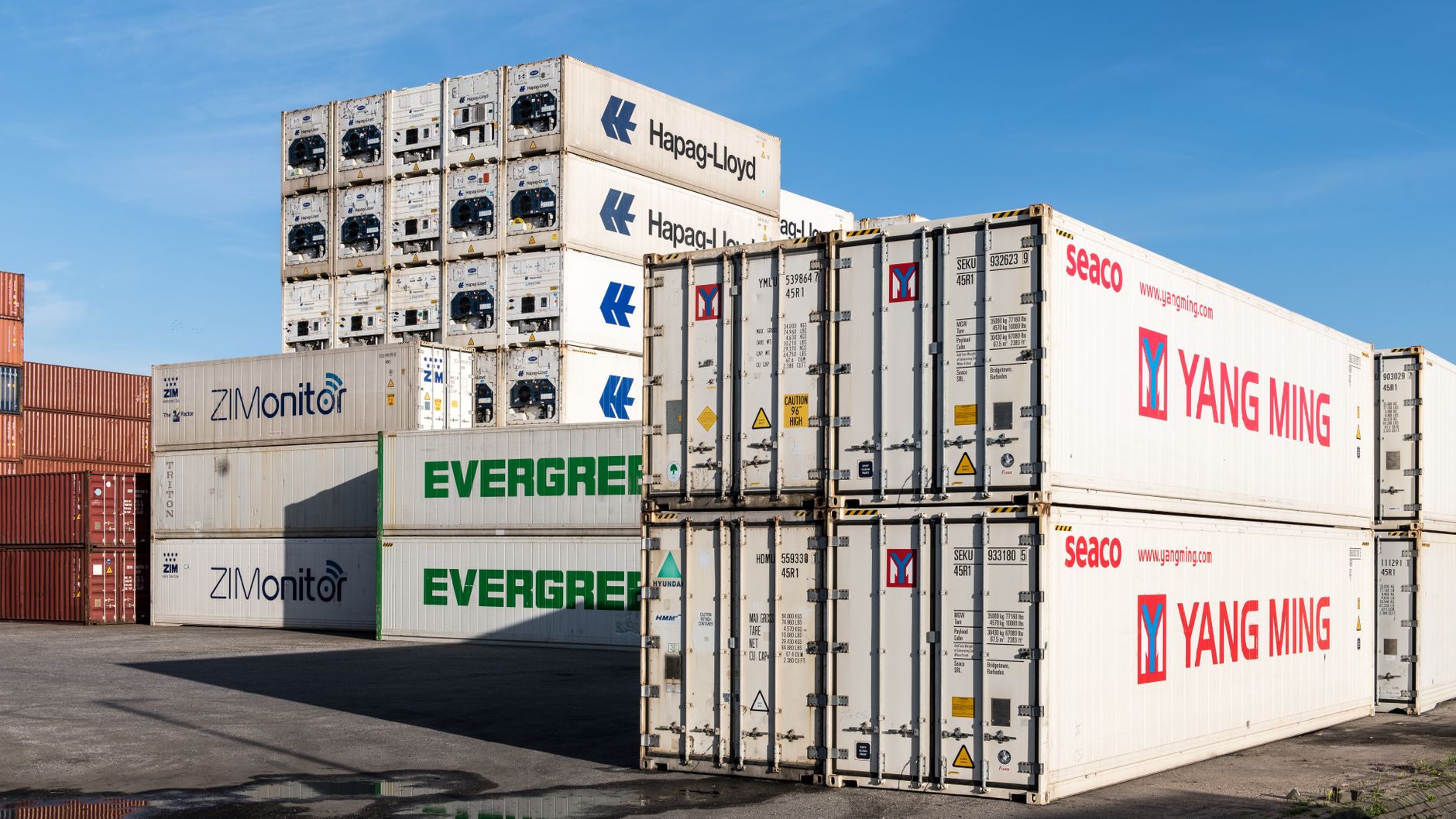
For frozen chicken, beef and pork, the practical minimum order is one full reefer container, because freight, plant loading and documentation costs are spread across the whole box, and a part-loaded container usually costs more per tonne than a full one. Buyers who understand how a container is filled, priced and mixed can plan orders that hit the best cost per tonne without tying up more cash or freezer space than they need.
Why the container is the unit of sale
Brazilian meat plants load and ship frozen product in refrigerated containers, usually called reefers. The plant, the freight forwarder and the shipping line all work in container units. A reefer has to be booked, plugged in, pre-cooled, loaded at a controlled temperature, sealed and released with a full set of export documents. Those fixed steps cost roughly the same whether the container holds 12 tonnes or a full load. That is why most exporters, including us, quote and sell by the container. Our wholesale buyer's playbook covers the wider sourcing process, and this guide focuses on the numbers behind the order size.
How much fits in a reefer
Published container guides commonly list a 40 foot reefer as carrying a maximum payload in the region of 29 tonnes, and a 20 foot reefer in the region of 27 tonnes, with a 40 foot box holding about 20 standard pallets or 23 Euro pallets on the floor. Treat these as reference figures only. The real loaded weight of your order depends on carton density, how the cartons are palletised or floor loaded, the shipping line's own limits, and road weight limits at the destination. Frozen cargo can be stowed close to the container's red load line, the painted limit near the ceiling, but never above it, because cargo above the line blocks the return air path and the product at the back may not hold temperature. Our guide to container loading and stowage explains this in detail, and our explainer on the reefer container covers how the equipment works.
What drives the cost per tonne
Container economics come down to a few cost blocks. Each one behaves differently as order size changes.
| Cost block | Behaviour as volume changes | What the buyer can do |
|---|---|---|
| Product price | Set by cut, grade, specification and market conditions | Agree a clear spec and compare like for like |
| Ocean freight | Charged per container, so cost per tonne falls as the box fills | Order full containers, load to the practical limit |
| Origin charges | Mostly fixed per container (handling, documents, inspection) | Avoid ordering below one container |
| Destination costs | Port fees, customs, inspection and cold storage, partly fixed per container | Plan storage and release before arrival |
| Financing and storage | Rises with order size and time in stock | Match volume to your sell-through speed |
The pattern is simple. Product price is a market matter, but freight and handling are fixed per container, so a full box lowers the cost per tonne of everything except the product itself. Understanding Incoterms 2020 matters here too, because FOB, CFR and CIF decide which of these blocks the seller carries and which the buyer carries. Our piece on FOB and CIF poultry pricing shows how the same product price looks very different once freight and insurance are added.
Mixed containers: when they work and when they do not
Many importers do not need a full container of one product. A mixed container carries more than one product or cut, for example two chicken cuts, or chicken and beef from the same plant. It can help smaller buyers and new accounts. It also has limits.
- Same temperature: every product in the box must travel at the same set point, normally frozen at minus 18 degrees Celsius or colder.
- Same origin plant or approved plants: products from different plants need separate documents, and each plant must be eligible for your country. Check this before agreeing a mix.
- Compatible species: some markets restrict pork, and halal programs generally require the halal chain to be kept clean. Do not mix pork with halal product in the same box.
- Documentation: a mixed box means more lines on the health certificate, packing list and invoice, and more room for errors at customs.
As a rule, two or three well planned lines in one container is manageable. Five or six small lines usually adds paperwork and risk faster than it saves money.
Right-sizing your first order
A new buyer often asks for less than a container to test the supplier. This is understandable, but it is rarely the cheapest or fastest way to start. A better approach is to size a full container to your real turnover. Frozen meat keeps well when stored correctly, as we explain in our guide to shelf life and storage, so a full box that sells through over several weeks is often safer than several small, expensive shipments. Work backwards from three numbers: how many tonnes you sell a month, how many tonnes your cold store can hold, and how much cash you can commit.
- Calculate monthly sell-through for each product.
- Check cold store capacity and pallet positions available at arrival.
- Decide whether one product fills a container or whether a two or three line mix is better.
- Ask the exporter for loaded weight and pallet configuration for your chosen cartons, not a generic estimate.
- Confirm payment terms before booking, since the deposit is calculated on the full container value. See our comparison of letters of credit and telegraphic transfer.
Hidden costs that make a small order expensive
Under-filled containers are not the only way to lose margin. Buyers should also plan for time based charges. If a container waits at the port because documents are late or the cold store is not ready, demurrage and detention can erase the saving from a good product price. Our guide to demurrage and detention explains how these charges work. Port choice also changes the cost and the transit time, so review the Brazilian export ports and transit times before you confirm the shipping plan.
How Brazil Prime Foods works with order sizes
We quote by container for frozen chicken, frozen beef and frozen pork, and we confirm loaded weight, plant eligibility for your market and the document set before you commit. Industry data on Brazilian protein exports is published by bodies such as the Brazilian Animal Protein Association (ABPA) and the Brazilian Beef Exporters Association (ABIEC), which are useful starting points when you size demand. To discuss a first order, request a quote at our quote page or contact our team.
Frequently asked questions
- What is the minimum order for Brazilian frozen meat?
- For most exporters the practical minimum is one full reefer container, because freight and handling costs are fixed per container. Specific minimums depend on the product, plant and market, so confirm with the exporter before you plan.
- How many tonnes fit in a 40 foot reefer?
- Published guides commonly list a maximum payload in the region of 29 tonnes for a 40 foot reefer. The actual loaded weight depends on carton density, pallet or floor loading and destination road limits, so ask the exporter for the confirmed figure.
- Can I mix chicken, beef and pork in one container?
- Sometimes. All products must travel at the same frozen temperature, and each plant must be eligible for your country. Pork cannot be imported into some markets, and halal programs require a clean halal chain, so pork should not share a box with halal product.
- Why is a part-loaded container more expensive per tonne?
- Ocean freight and most origin and destination charges are set per container, not per tonne. If the box is only partly filled, the same fixed cost is spread over fewer tonnes.
- How do I decide my first order size?
- Work from your monthly sell-through, available cold store capacity and the cash you can commit. A full container sized to real turnover is usually cheaper and simpler than several small shipments.
- What extra costs should I budget beyond product and freight?
- Plan for destination port fees, customs clearance, inspection, cold storage, inland transport and possible demurrage or detention if the container is delayed. Financing the stock while it sells also has a cost.
References & further reading
Explore our export catalogue
Brazil Prime Foods Export coordinates frozen-meat sourcing and export for wholesale buyers in eligible markets. Confirm the supplying plant and documentation for your order.
Request support
Ask our export team about pricing, specifications, documentation or shipping for your order.
Request a QuoteContact us
Direct line to our trade desk in Brazil, calls, WhatsApp and email.
Contact our team