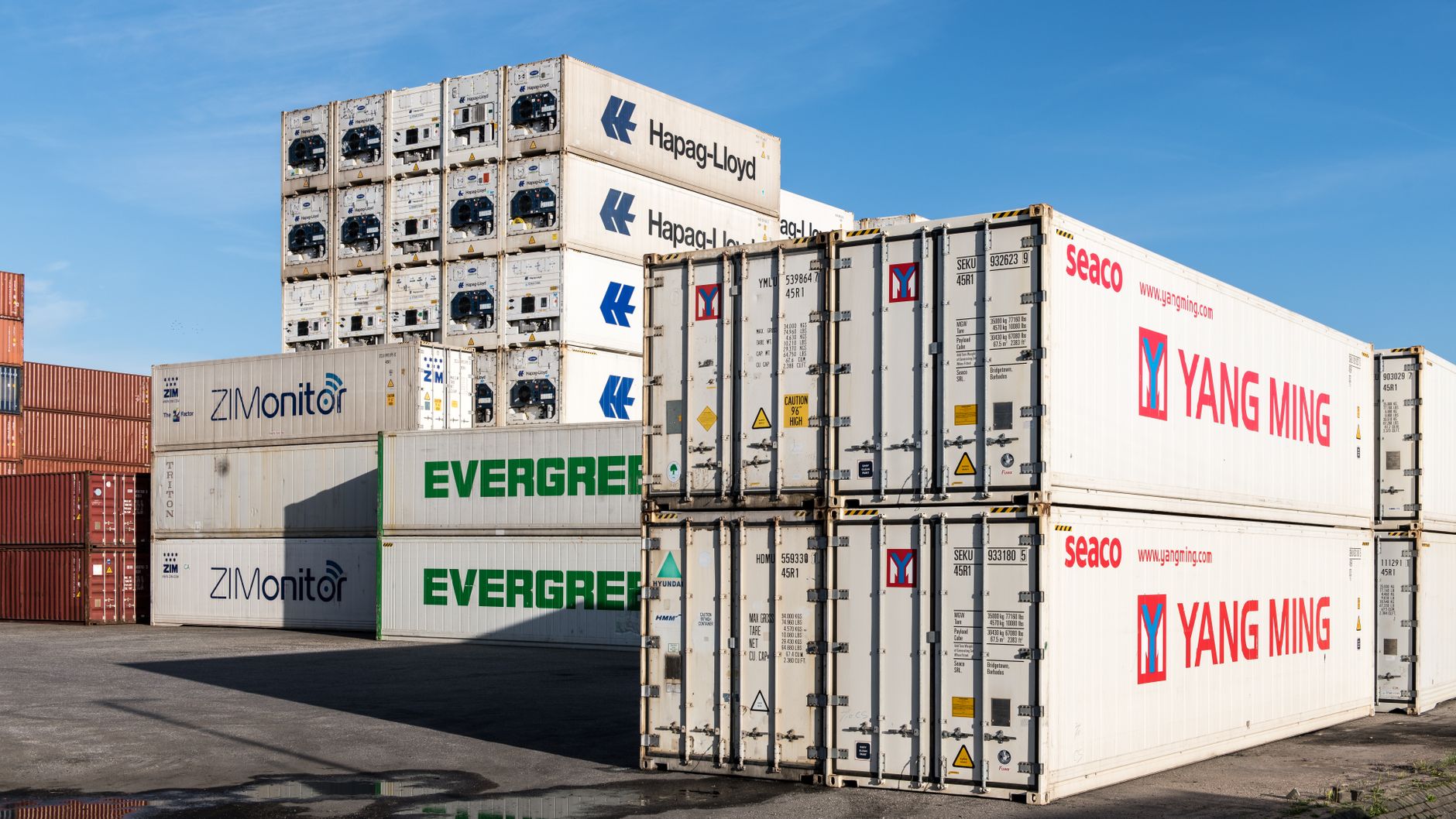
Cold-chain logistics for frozen food exports is the unbroken sequence of temperature-controlled steps that keeps product at or below -18°C from the processing plant in Brazil to the importer's cold store overseas, and every handover in that sequence is a point where quality, compliance and money can be lost.
For importers of Brazilian frozen chicken, beef and pork, the cold chain is not a logistics detail that sits downstream of the commercial negotiation. It is a large part of what you are buying. Two suppliers can quote the same cut, the same packing and the same price, and still deliver very different cargo, because one of them manages blast freezing, reefer set points, port dwell time and documentation as a single controlled system, and the other treats each stage as somebody else's problem.
This guide walks through the full chain, stage by stage, and explains what a buyer should specify, verify and monitor at each point.
Why -18°C Is the Reference Temperature
The internationally recognised benchmark comes from the Codex Alimentarius Code of Practice for the Processing and Handling of Quick Frozen Foods (CXC 8-1976), which sets -18°C as the reference temperature for the storage and distribution of quick-frozen foods. Codex also treats the freezing process as incomplete until the product has reached -18°C or colder at its thermal centre, after temperature stabilisation, not merely at the surface.
That distinction matters commercially. A carton that reads -18°C on the outside but is warmer in the middle has not been properly frozen, and it will show up later as drip loss, freezer burn, protein denaturation and shortened shelf life. It is also worth noting that the Codex Committee on Food Hygiene has asked FAO and WHO to review the scientific basis for frozen storage temperature thresholds, so buyers should treat -18°C as the current baseline rather than a permanently settled figure, and should always confirm the requirements of their own destination authority.
Practical rule for buyers: specify -18°C or colder as a contractual condition, specify where the temperature is measured, and specify who evidences it. A number without a measurement point and an owner is not a specification.
For the underlying definitions, see our explainers on IQF freezing and frozen meat storage and shipping standards.
Stage 1: The Plant, Blast Freezing and Cold Storage
The chain begins inside a federally inspected Brazilian plant. Product moves from slaughter and cutting into blast freezing, then into the plant's cold store to await consolidation.
What to verify at this stage
- Plant inspection status. Confirm the establishment holds valid Brazilian federal inspection and, critically, that it is approved by your destination authority for the product category you are buying. Approval is granted plant by plant and market by market. See what SIF certification means.
- Freezing method and residence time. Ask whether the product is IQF or block frozen, and how long it holds in the blast tunnel or spiral before transfer.
- HACCP controls around freezing. Freezing and cold storage should appear as controlled steps in the plant's plan, with monitoring records. See HACCP in Brazilian meat plants.
- Production and expiry coding. Confirm the format printed on cartons matches what your customs authority and your retail customers will accept.
Stage 2: Inland Transport to the Port
Brazil is a large country and product frequently travels several hundred kilometres by refrigerated truck from the plant to a port terminal or a port-adjacent consolidation warehouse. This leg is where many avoidable excursions occur, because trucks are opened, doors are held, and units are sometimes run in start-stop mode rather than continuously.
Buyers with meaningful volume should ask their supplier to confirm that inland reefer units run continuously, that pre-cooling occurs before loading rather than after, and that loading is done from an enclosed dock rather than an open yard.
Stage 3: Stuffing the Reefer Container
A refrigerated shipping container does not freeze cargo. It maintains the temperature of cargo that is already at the correct temperature. This is the single most misunderstood point in frozen export logistics, and it is why pre-cooling the product, not the container, determines outcomes.
Key controls when the container is stuffed:
- Set point. Normally -18°C or colder for frozen meat. Some buyers specify -20°C or -22°C to build in a margin for door openings and terminal handling.
- Load line. Cargo must be stowed below the red load line so return air can circulate. Blocking airflow is a common cause of warm spots at the door end.
- Stow pattern. Frozen cargo is generally block-stowed to limit air channels through the load, unlike chilled cargo which needs air to reach every carton.
- Data logger. Place an independent logger inside the container, not only relying on the carrier's machinery readout.
- Seal and photograph. Record the seal number and photograph the stuffed container before doors close.
Our explainer on what a reefer container is covers the equipment itself in more detail, and frozen pork packaging and cold-chain requirements shows how packaging choices interact with stowage.
Stage 4: Port Terminal and Ocean Leg
Once at the terminal, the container must be plugged into a reefer socket. Terminal reefer plug capacity is therefore a real constraint on Brazilian protein exports, and it is one reason the southern ports have grown so quickly as protein gateways. Brazil's main maritime gateways for reefer protein include Santos, Paranaguá, Itajaí and Itapoá, Rio Grande, Suape and Pecém, with Paranaguá in particular investing heavily in reefer plug capacity and handling a large share of national poultry shipments.
During the ocean leg the risks change character. The machinery is generally reliable and monitored, so the main exposures become transhipment, where a box may be moved between vessels and briefly unplugged, and port congestion at either end.
| Stage | Primary risk | Buyer control |
|---|---|---|
| Plant and blast freezing | Incomplete core freezing | Specify core temperature, request records |
| Inland transport | Excursion during loading | Enclosed dock loading, continuous running |
| Container stuffing | Blocked airflow, wrong set point | Load line compliance, written set point |
| Terminal and ocean | Unplugged during transhipment | Prefer direct services, independent logger |
| Destination clearance | Delay at inspection, demurrage | Pre-check documents, book cold storage early |
Stage 5: Destination Clearance and Delivery
The most expensive cold-chain failures usually happen after arrival, not at sea. A container that sits unplugged in a yard while a document discrepancy is resolved can lose more temperature integrity in three days than in a five-week voyage.
Protect this stage by preparing documentation before the vessel sails rather than after it arrives, confirming that the destination authority's inspection appointment can be booked in advance, and arranging receiving cold storage capacity before the container is released. Documentation accuracy is a cold-chain issue, not just an administrative one, precisely because errors translate directly into unplugged dwell time.
Monitoring, Evidence and Claims
If a claim arises, the party with better records generally prevails. Buyers should insist on a temperature record for the full journey, retain the logger and download the file before the cargo is discharged, photograph the load at both stuffing and devanning, and record the seal number at every handover.
Good suppliers welcome this. Traceability and record-keeping are increasingly expected in Brazilian food exports anyway, as covered in our guide to traceability requirements and our overview of food export certifications.
How Brazil Prime Foods Manages the Chain
We work with federally inspected partner plants and manage the sequence from plant cold store through port stuffing to bill of lading, so that our buyers deal with one accountable party rather than four. Whether you are sourcing frozen chicken, frozen beef or frozen pork, the cold-chain specification is agreed in writing before production starts.
If you are building or reviewing an import programme, request a quotation and tell us your destination market, required set point and preferred discharge port. You can also review our certifications or contact our export team directly.
For product-specific detail, start with our pillar guides on importing Brazilian frozen chicken, frozen beef and frozen pork.
Authoritative References
- FAO / WHO Codex Alimentarius, including CXC 8-1976 on quick frozen foods
- ABPA, Brazilian Animal Protein Association, for poultry and pork export data
Frequently asked questions
- What temperature should frozen meat be kept at during export?
- The Codex Alimentarius Code of Practice for the Processing and Handling of Quick Frozen Foods (CXC 8-1976) sets -18C as the reference temperature for storage and distribution of quick-frozen foods, measured at the thermal centre of the product after stabilisation. Many buyers specify -20C or colder as a contractual set point to build in a margin for handling. Always confirm the requirements of your own destination authority, since national rules can differ.
- Does a reefer container freeze the cargo?
- No. A refrigerated container maintains the temperature of cargo that is already at the correct temperature. It does not have the capacity to pull down a warm load. This is why product must be fully frozen at the plant and pre-cooled before stuffing, and why blast freezing capacity at the plant matters more to outcomes than the container itself.
- Where does most cold-chain damage actually happen?
- Most avoidable temperature excursions happen at the handovers rather than during the ocean voyage. The highest risk points are loading at the plant or inland warehouse, transhipment where a container may be briefly unplugged, and dwell time at the destination port while documents or inspections are resolved. The ocean leg is generally the most stable part of the chain because the unit runs continuously and is monitored.
- Which Brazilian ports handle frozen meat exports?
- Brazil's main maritime gateways for refrigerated protein include Santos, Paranagua, Itajai and Itapoa, Rio Grande, Suape and Pecem. Paranagua has invested heavily in reefer plug capacity and handles a large share of national poultry shipments. The right port for your shipment depends on the plant location, the shipping line's service and your discharge port.
- What temperature records should an importer ask for?
- Ask for an independent data logger placed inside the container at stuffing, in addition to the carrier's machinery readout, plus the seal number recorded at every handover and photographs of the load at both stuffing and devanning. Download the logger file before the cargo is discharged. If a claim arises, the party with the more complete record generally prevails.
- How can I reduce demurrage risk on frozen shipments?
- Prepare and check documentation before the vessel sails rather than after arrival, confirm whether your destination authority allows inspection appointments to be booked in advance, and secure receiving cold storage capacity before the container is released. Documentation accuracy is a cold-chain control because every day of unresolved paperwork is a day the container may sit unplugged in a yard.
References & further reading
Explore our export catalogue
Brazil Prime Foods Export ships SIF-certified product to wholesalers, distributors and foodservice operators worldwide.
Request support
Our export team replies within one business day, pricing, specs, documentation or shipping.
Request a QuoteContact us
Direct line to our trade desk in Brazil, calls, WhatsApp and email.
Contact our team